Why Ohio Issues a Plate and Not a Decal
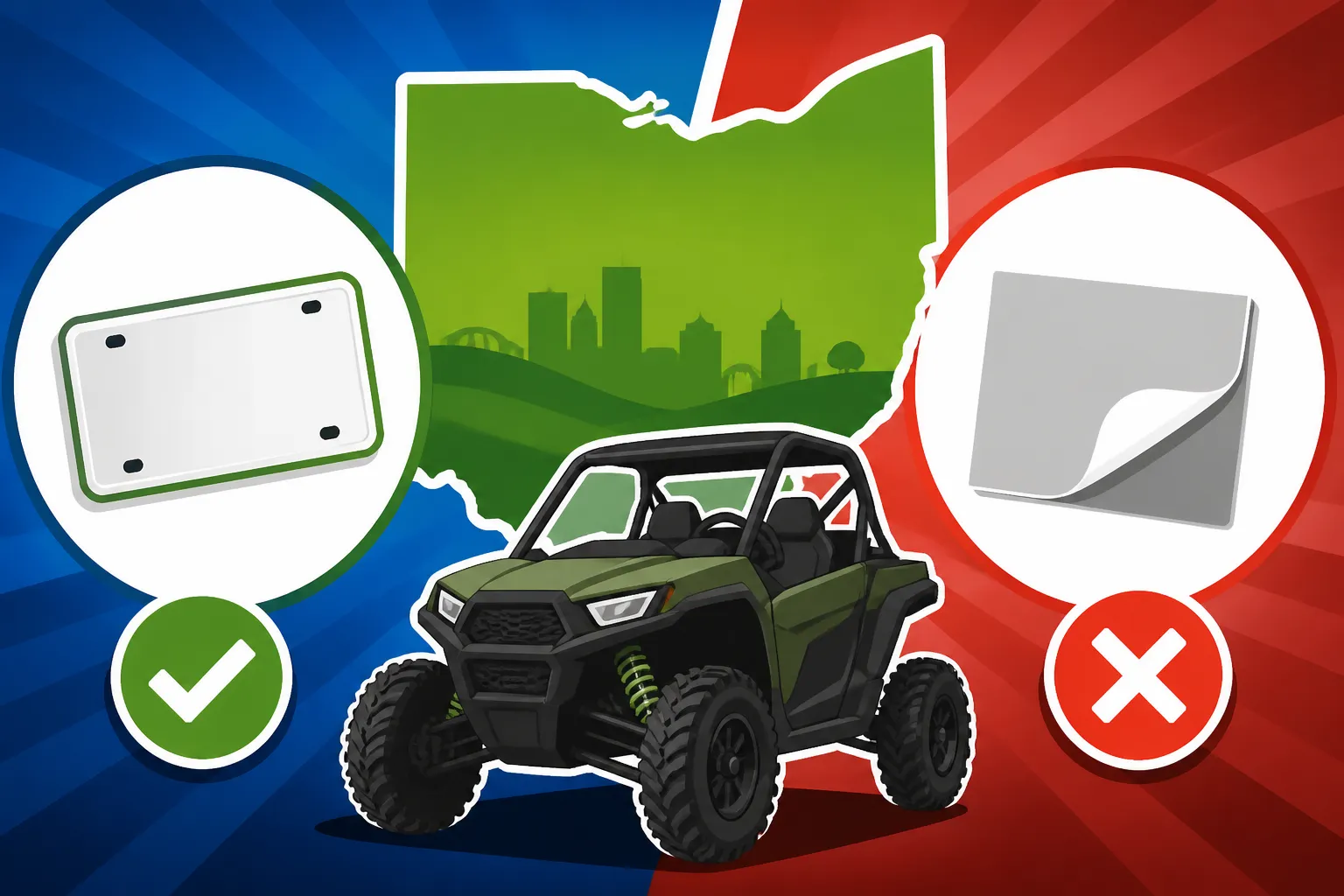
It can be a little confusing when you're trying to figure out how to legally operate your ATV or UTV in Ohio. Many states use simple decals for off-road vehicles, but Ohio takes a different approach, requiring a physical license plate. This guide will walk you through why Ohio uses a plate system for All-Purpose Vehicles (APVs) instead of a decal, what that means for you, and how to stay compliant.
Understanding Ohio's All-Purpose Vehicle (APV) Definition
Ohio's laws are unique in how they categorize off-road vehicles. Instead of explicitly separating ATVs, UTVs, side-by-sides, or dirt bikes for registration purposes, the state lumps them all under one broad term: All-Purpose Vehicle, or APV. This distinction is crucial because it directly influences how these machines are registered and identified.
The Broad Umbrella of "All-Purpose Vehicle"
When you hear "APV" in Ohio, it's not just a fancy term; it's the legal definition that covers a vast array of machines designed for off-highway use. This includes your typical four-wheeled ATVs, the increasingly popular side-by-sides (also known as UTVs), many types of dirt bikes, and even some custom-built buggies as long as they meet the specific criteria outlined in the state's statutes. This broad classification means that whether you're riding a nimble quad or a robust utility vehicle, it's all handled under the same set of rules for titling and registration. The state chose this all-encompassing definition to streamline the administrative process and avoid creating separate regulatory frameworks for each specific type of off-road machine, which could quickly become cumbersome with the continuous evolution of vehicle designs.
For many riders coming from other states, this can be a bit of a head-scratcher. They might be used to their state having distinct rules or classifications for an ATV versus a UTV. But here in Ohio, if it's primarily designed for off-highway recreation or utility and isn't a snowmobile, it's likely an APV. This simplifies things for the Bureau of Motor Vehicles (BMV) and local deputy registrars, as they don't have to make fine distinctions between machines when processing your paperwork. The important thing for you as a rider is to understand that your machine, whatever its specific make or model, falls into this category, and thus, its registration will follow the APV plate system. If you're looking to get your machine legal, you'll want to review how to [Registering an APV in Ohio].
Why the Term Matters for Display Rules
The "APV" designation isn't just about what's on your title paperwork; it directly dictates the visible identification your machine needs. Because Ohio defines these vehicles broadly as APVs, it applies a consistent identification method across the board: a physical license plate. This stands in contrast to states that might have separate decal systems for ATVs and UTVs, or even no formal registration for certain types of off-road machines. Ohio’s system means there’s no guesswork for law enforcement or other riders about whether a machine is properly registered. If it’s an APV, it gets a plate.
This standardized approach makes enforcement clearer and less prone to misinterpretation. When a park ranger or local deputy sees an off-road vehicle, they simply look for that plate, rather than trying to discern if a decal is applicable or if the machine falls under some nuanced exception. This consistency helps ensure that all off-highway vehicles that should be registered are clearly marked, contributing to better trail management and accountability. It also supports the funding mechanisms for trails, as the revenue from these registrations is tied directly to the plate issuance.
The Logic Behind Ohio's APV Plate System
The decision to use a full license plate for All-Purpose Vehicles instead of a smaller decal might seem like a minor detail, but it's rooted in practical considerations for visibility, enforcement, and public land management. Ohio's approach ensures a consistent and easily identifiable system for all registered APVs across the state.
Visibility and Enforcement on Trails and Roads
One of the primary reasons Ohio opted for a physical license plate is enhanced visibility and ease of enforcement. Picture yourself on a dusty trail in Wayne National Forest or even riding a designated township road; a small decal can be easily obscured by mud, dirt, or even thick brush. A standard-sized license plate, however, is designed to be larger and more prominent, making it much easier for law enforcement officers, park rangers, and even fellow riders to identify a machine. This is crucial for maintaining safety and order on public lands, as it allows authorities to quickly verify registration and identify vehicles involved in incidents.
The plate acts as a clear, unmistakable identifier, much like the license plate on your car or truck. This makes it simpler for officials to track compliance, especially when machines might be crossing between private and public lands, or utilizing the limited network of county and township roads where APV use is permitted. In situations requiring investigation, a visible plate ensures that the machine can be traced back to its owner swiftly. It's a proactive measure designed to promote responsible riding and ensure that everyone using shared resources is doing so legally. For tips on keeping it visible, see [Keeping an Ohio Plate Distinctly Visible].
The Plate as a Unifying Identifier
Another compelling reason for the plate system is its role as a unifying identifier for all types of APVs. As we discussed, Ohio's APV definition is broad, encompassing ATVs, UTVs, and dirt bikes. If the state used different decal systems for each vehicle type, it could create confusion and complexity for both riders and enforcement agencies. By mandating a single type of display—the license plate—Ohio ensures consistency. This means whether you're riding a massive side-by-side or a compact quad, the visual proof of registration is uniform.
This uniformity simplifies the administrative burden for the BMV and deputy registrars, as they only need to manage one type of registration display for APVs. From a rider's perspective, it eliminates any ambiguity about what form of identification is required for their specific machine. It's a clear, "one size fits all" solution that supports the state's comprehensive approach to off-highway vehicle regulation. This contrasts sharply with snowmobiles, which receive decals, a distinction we'll explore further, highlighting the specific needs and characteristics that inform each choice.
Practicalities of Displaying Your Ohio APV Plate
Once you've navigated the [Ohio APV Registration Paperwork] and secured your physical plate, the next step is ensuring it's properly displayed on your machine. Ohio law is specific about how and where your APV plate must be mounted to ensure it serves its purpose effectively.
Proper Mounting and Visibility Requirements
Ohio Revised Code dictates that the APV plate must be displayed on the rear of the vehicle, securely fastened, and kept free from obstruction. This isn't just a suggestion; it's a legal requirement designed to make your plate clearly visible at all times, whether you're parked at a trailhead or kicking up dust on a back trail. Imagine trying to identify a machine from behind if its plate is caked in mud, bent out of shape, or tucked away where it can't be easily seen. Law enforcement needs to be able to read that plate without hassle, and that means you, as the owner, have a responsibility to keep it legible.
A common scenario is riding through muddy conditions. While it's part of the fun for many, it can quickly render your plate unreadable. Riders often find themselves needing to periodically wipe down their plate during a ride to maintain compliance. It’s also important to mount it in a location that minimizes the risk of it being bent or torn off by trail obstacles. Some aftermarket accessories might interfere with plate visibility, so always double-check your setup before heading out. Proper mounting often involves using a sturdy plate bracket and ensuring all bolts are tight to prevent vibration from loosening them or causing the plate to fall off. If you’re ever unsure about how to best mount your plate, a quick look at other registered APVs or asking for advice at your local riding club can be helpful.
Why Your APV Plate Is Your Trail Permit
Here's an important point that often surprises new riders in Ohio: your registered APV plate isn't just proof of registration; it also serves as your official permit for accessing Ohio's state forest APV trails. That's right—there's no separate sticker or pass you need to purchase from the Ohio Department of Natural Resources (ODNR) for state forest trail access, unlike some other states or even certain federal lands. When you pay your [Ohio APV Registration Cost], a portion of those fees goes directly into maintaining these trails, and your plate acts as your receipt and permission slip all rolled into one. This system simplifies access and ensures that those who contribute to the trail fund are the ones benefiting from it.
However, it's crucial to understand that this applies specifically to Ohio's state forest APV areas, like those found in Monday Creek or Hanging Rock. This "plate as permit" rule does not extend to federal lands, specifically the Wayne National Forest. If you plan to ride in Wayne National Forest, which has three APV trail systems in Ohio, you will need to purchase a separate Wayne National Forest OHV Permit. This federal permit is distinct from your state registration plate. So, while your Ohio plate gets you onto state trails, always remember to check the specific requirements for any riding area you visit, especially if it's not a state forest. This duality means riders need to be diligent about understanding which permit applies to which trail system they plan to enjoy.
Ohio's Registration Cycle and Plate Longevity
Understanding the lifespan of your Ohio APV plate and how it interacts with the state's unique registration cycle is key to staying legal on the trails. It's not a yearly renewal for the plate itself, but for its validation.
The Three-Year Cycle and Plate Life
Unlike many annual registrations for vehicles, Ohio operates on a three-year registration cycle for APVs. When you first register your machine, you receive a physical license plate that is designed to stay with that specific APV for the entirety of its registered life in Ohio. This means you don't get a new plate every year or even every three years, assuming you keep the same machine. This approach cuts down on waste and simplifies the long-term identification of your vehicle. The plate itself is robust and intended to withstand the rigors of off-road use, though it's still susceptible to wear and tear.
This three-year cycle is for the validity of your registration, not the physical plate itself. So, while the plate remains constant, its legal status as "current" needs to be updated. This is where the validation sticker comes into play, which you receive upon each renewal. The idea is that once you have your official [Ohio APV Plates and Validation Stickers], that plate becomes a permanent fixture of your machine, clearly associating it with its Ohio registration. This structure makes it straightforward for owners, as they don't have to worry about replacing the entire plate unless it's lost, stolen, or damaged beyond recognition.
Renewing Your Registration and the Validation Sticker
Even though the physical plate stays with your APV for its operational life, your registration is not a one-and-done deal. You are required to renew your registration every three years. Upon renewal, you won't get a new metal plate, but you will receive a new validation sticker. This small, adhesive sticker is vitally important, as it updates your plate's validity and shows that your registration is current. The sticker typically displays the year your registration expires and is designed to be affixed to a designated spot on your APV plate, usually in a corner.
It’s crucial to ensure this sticker is prominently displayed and kept clean, just like the plate itself. A faded, torn, or missing sticker can lead to questions from law enforcement about the validity of your registration. If your sticker gets damaged or goes missing before your next renewal cycle, you might need to contact the BMV or a deputy registrar to inquire about a replacement. Planning ahead is always a good idea; Ohio allows you to [Renewing an Ohio Registration Ninety Days Early], so you don't find yourself caught with an expired sticker just as prime riding season begins. Always mark your calendar for that three-year renewal, ensuring your sticker is updated and your APV remains legal for trail and road use where permitted.
Comparing APV Plates to Other Recreational Vehicles
Ohio's choice of a plate system for APVs isn't universal, even within its own borders. Understanding why snowmobiles, for example, are handled differently sheds light on the specific rationale behind the APV plate.
The Snowmobile Decal Exception in Ohio
Here's where things get interesting and highlight the specific design considerations for APVs. While All-Purpose Vehicles get a license plate, snowmobiles in Ohio are registered with a decal, not a plate. This isn't an oversight; it's a deliberate choice based on the unique operational environment and design of snowmobiles. Imagine trying to mount a rigid metal plate onto the flexible, often curved bodywork of a snowmobile, especially one designed to shed snow and ice at high speeds. It would be prone to damage, easily obscured, and challenging to secure effectively without compromising the vehicle's design or safety.
A decal, on the other hand, can conform to the contours of the snowmobile, is lightweight, and is less likely to be ripped off by snow or impact. It's typically applied in a highly visible location, often on the cowl or tunnel, where it's relatively protected but still easily seen. This practical difference in vehicle design and use environment is the key reason [Why a Snowmobile Gets Decals Instead of a Plate] rather than a metal plate. It illustrates that Ohio's registration display decisions are tailored to the specific type of recreational vehicle, prioritizing both enforceability and the functional characteristics of the machine itself. This contrast reinforces that the APV plate isn't arbitrary but a well-considered choice for ATVs, UTVs, and dirt bikes.
State-to-State Variations in Registration Display
Ohio's plate system for APVs is certainly not the only approach out there, and riders who have experience in other states might be familiar with different methods. Many states do indeed opt for a decal system for their off-road vehicles. These decals are often smaller, less conspicuous, and typically applied directly to the bodywork or frame of the ATV or UTV. The reasoning behind using decals in those states often boils down to simplicity, lower manufacturing cost, and perhaps a perception that off-road vehicles don't require the same level of overt identification as on-road vehicles.
However, these varied approaches can lead to confusion for riders crossing state lines. For instance, a rider from Pennsylvania might be used to a specific trail pass decal, while someone from West Virginia might have a different type of sticker. Ohio's decision to use a plate offers a more robust, standardized, and easily recognizable form of registration that aligns closely with how other registered vehicles are identified in the state. While it might seem like a small detail, this choice reflects Ohio's philosophy on enforcement, trail funding, and the general integration of APVs into the broader regulatory landscape. It means that regardless of where you've ridden before, in Ohio, your APV needs that plate. You can find more details on what [What Ohio Law Asks of Nonresident Riders] if you're visiting.
Here's a quick comparison of the two systems within Ohio:
| Feature | Ohio All-Purpose Vehicle (APV) Plate | Ohio Snowmobile Decal |
|---|---|---|
| Purpose | Registration & Trail Permit (State Forests) | Registration |
| Physical Form | Rigid Metal Plate | Adhesive Decal |
| Placement | Rear of Vehicle | Visible area on cowl/tunnel |
| Visibility | High, designed for diverse conditions | Good, conforms to vehicle |
| Durability | Durable, but can bend/obscure | Flexible, less prone to bending |
| Renewal | New Validation Sticker every 3 years | New Decal every 3 years |
| Enforcement | Easily identifiable from a distance | Easily identifiable up close |
| Vehicle Type | ATVs, UTVs, Dirt Bikes, Side-by-Sides | Snowmobiles |
Troubleshooting and Maintaining Your Ohio APV Plate
Your Ohio APV plate is more than just a piece of metal; it's your legal pass for riding. Keeping it in good condition and knowing what to do if something goes wrong is crucial for uninterrupted enjoyment of Ohio's trails.
Replacing a Lost, Stolen, or Damaged Plate
Accidents happen. Plates can get bent, damaged, fall off on a bumpy trail, or even be stolen. If your Ohio APV plate is lost, stolen, or damaged to the point where it's no longer legible or securely attached, you need to address it promptly. Riding with an invalid or missing plate can lead to fines and legal trouble, so it's not something you want to put off. The process for [Replacing a Lost Ohio APV Plate] involves a trip to your local deputy registrar. You'll likely need to fill out some paperwork, and there will be a fee associated with issuing a replacement plate. It's a good idea to bring your current registration card and proof of identity.
In cases of theft, it's always wise to file a police report first. This not only creates an official record but can also be helpful documentation when you apply for your replacement. If you need any affidavits or specific legal forms to document the loss for your records or for the BMV, resources like LawDepot can be useful for quickly generating standard legal documents to ensure you have all your bases covered before heading to the deputy registrar. Having clear documentation of the incident can smooth the replacement process and protect you from any potential complications.
Ensuring Long-Term Plate Visibility
Beyond simply replacing a lost plate, proactive maintenance is key to its longevity and legibility. Given the environments APVs often operate in, your plate is going to encounter mud, dust, water, and debris. Regularly cleaning your plate is paramount. A simple wipe-down with a damp cloth after each ride can prevent caked-on dirt from becoming a permanent fixture, which could obscure numbers and letters over time. Using a gentle brush for tougher grime can also help, but avoid abrasive cleaners or harsh scrubbing that could damage the reflective coating or paint.
Another aspect of long-term visibility is proper mounting. As mentioned, the plate needs to be securely fastened. Consider using lock washers or thread-locking compound on the mounting bolts to prevent them from vibrating loose over time. Some riders even add a clear plate cover for extra protection against impacts and mud, but ensure any cover you use is clear, non-tinted, and doesn't obstruct the plate in any way, as some jurisdictions have rules against plate covers. By taking these simple steps, you can help ensure your Ohio APV plate remains legible and compliant for the full three-year registration cycle and beyond, allowing you to focus on the enjoyment of your ride without worrying about unnecessary hassles.
Disclaimer
This article is for general informational purposes only and does not constitute professional advice. Laws, prices and regulations vary by location and change over time. Consult a qualified professional for guidance on your specific situation.