Carrying a Spare Can on an Ohio Trail
A spare fuel can can turn a short ride into a longer one, but carrying gasoline adds fire, spill, and handling risks. On Ohio trails, the rules can also depend on who manages the land. Here’s how to check the requirements, choose a suitable container, secure it on an ATV or UTV, and refuel with less risk.
Check the rules for the land you plan to ride
There isn’t one simple assumption that covers every Ohio riding area. State forest trails, Wayne National Forest routes, private parks, and other properties may have different rules for vehicles, fuel, and fire prevention. A container that is practical for your machine is not automatically allowed at every destination.
Before loading up, identify the land manager and check its current rules. Start with the property’s official information, then contact the office that manages the riding area if the fuel-container rules are unclear. You can also review Ohio Rules for Carrying Fuel and, for federal land, Ohio Rules for Riding a National Forest. Rules for state forest land may differ, so check Ohio Rules for Riding a State Forest as well.
Look for details such as:
- Whether spare gasoline may be carried on the trail.
- Whether fuel must be in a particular type of container.
- How a container must be secured to the machine.
- Whether refueling is allowed at a trailhead or staging area.
- Whether a fire restriction changes what is permitted.
- Whether special rules apply to a private park or organized ride.
Do not rely on a rule you remember from another property. A state forest and a privately operated park can set different conditions, and temporary fire restrictions or closures may affect what is allowed. Check the trailhead notices before riding and ask a ranger or park operator when the written instructions do not answer your specific question. What the Trailhead Board Tells You Before a Ride can help you know what information to look for at the entrance.
| Riding location | What to verify before carrying spare fuel |
|---|---|
| Ohio state forest | Current forest rules, fire restrictions, container requirements, and trailhead instructions |
| Wayne National Forest | Forest-specific fuel and fire rules, plus any temporary restrictions |
| Private riding park | The park’s rules for fuel containers, refueling, and storage |
| Club or event route | The land manager’s rules and any additional event instructions |
If you cannot confirm that a spare can is permitted, do not assume that carrying a smaller amount makes it acceptable. Ask before you leave home. Calling a Ranger District Before You Load is a useful step when your route includes national forest land and you need to resolve a question in advance.
Choose a container made for gasoline
Use a purpose-built portable fuel container intended for gasoline. A random jug, drink bottle, or repurposed household container is not a safe substitute. It may leak, fail in heat or vibration, or be mistaken for something other than fuel. A proper container is designed for fuel storage and has a cap and closure system suited to that use.
Check the container before buying or packing it. Look for clear identification of the fuel it can hold, sound construction, a cap that closes securely, and a condition that is free of cracks, bulges, or damaged fittings. Follow the container maker’s instructions for filling, transport, and storage. Requirements and product designs vary, so do not assume that every can is suitable simply because it is sold as portable.
When comparing options, think about the machine and the ride, not just the container’s shape. A can needs to fit a secure mounting point without interfering with the rider, passenger, controls, exhaust, suspension, or cargo. If shopping online, Amazon and powersports retailers may offer containers in different shapes, but confirm the manufacturer’s intended use and how the can will mount to your machine before ordering.
A useful choice should meet these practical tests:
- It is intended for gasoline. Do not use a water container or an unmarked jug.
- It closes reliably. The cap and any spout or vent should be intact and secure for transport.
- It can be restrained firmly. A can that rocks, slides, or bounces is a poor fit.
- It is manageable when full. A container that is awkward to lift or pour can increase spill risk.
- It suits the ride. A long, remote route may call for different planning than a short loop close to the staging area.
Do not overfill a container. Fuel needs room to expand, particularly when the can warms in sunlight or near a hot machine. Follow the container’s fill guidance rather than topping it off to the brim. Keep the outside clean and dry before securing it so that fuel residue does not transfer to seats, clothing, luggage, or trail surfaces.
A spare can is also not a substitute for sensible range planning. Consider the route length, the machine’s fuel use under the expected conditions, and whether you can safely return to a fuel stop or staging area. Mud, steep climbs, low tire pressure, heavy loads, and repeated stops can use more fuel than an easy ride. Carry only what you reasonably need and what the property allows.
Secure the can away from heat and movement
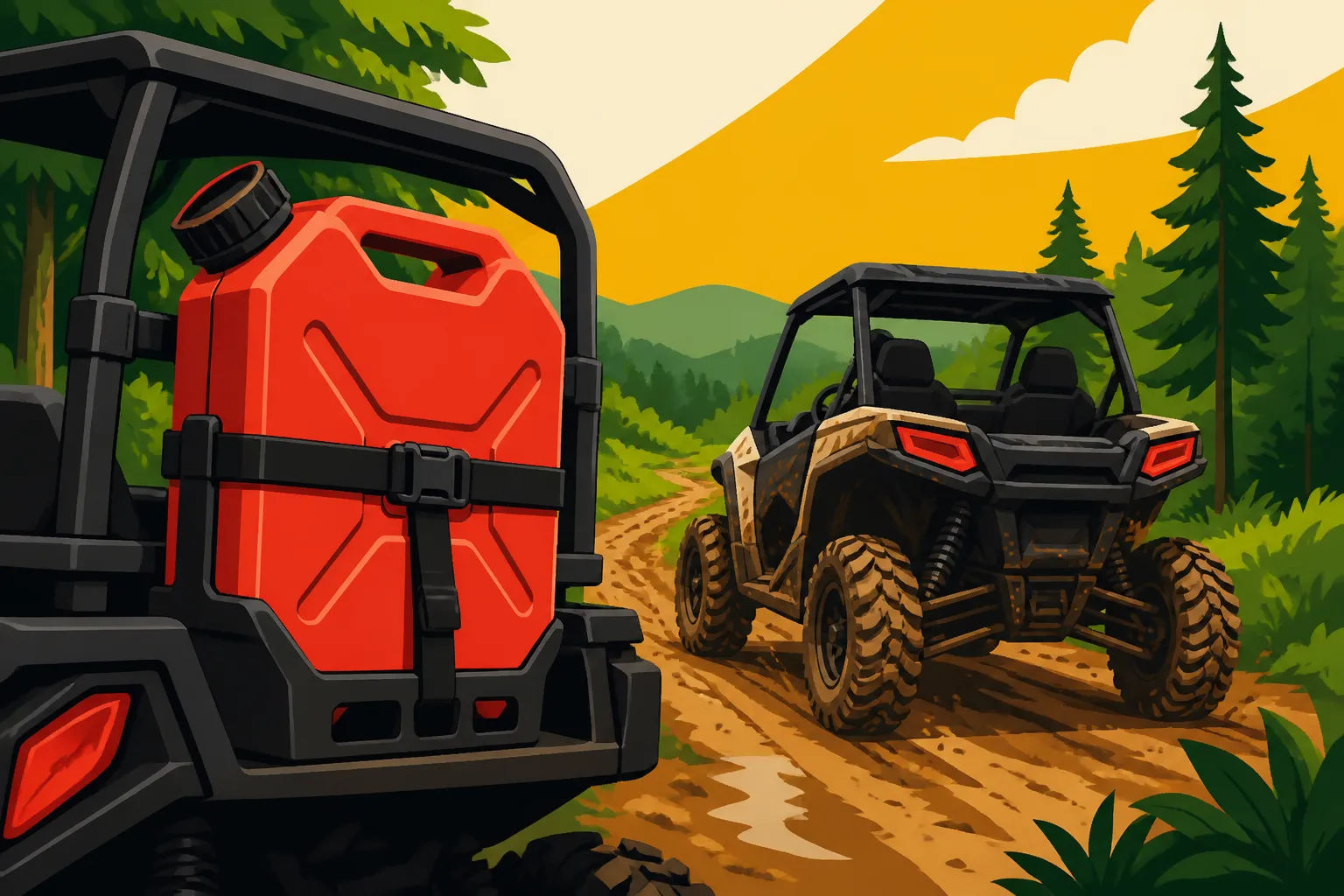
A fuel container must stay put over bumps, ruts, and turns. A loose can can fall off, strike a person, damage the machine, or leak onto hot components. Before the ride, mount it in a place designed to carry cargo and use a restraint that keeps it from shifting in any direction.
Keep the container away from the exhaust, engine heat, moving parts, and areas where it could be crushed or punctured. Do not place it where it blocks a brake light, license or registration plate, visibility, or access to controls. On an ATV, a rack may be a mounting option only if it keeps the can stable and clear of hot parts and the rider. On a UTV, secure cargo in a suitable exterior area where the container cannot slide into the cabin or contact passengers. Follow the vehicle and container manufacturers’ instructions.
A strap that looks tight while the machine is parked can loosen after a rough section. Check the restraint before setting off, then inspect it during breaks. If the can is wet with fuel, smells strongly of gasoline, or has a damaged cap, do not continue riding with it attached. Move away from ignition sources, handle the leak cautiously, and follow the land manager’s instructions for reporting a spill.
These checks help catch common mounting problems:
- Confirm that the can is closed and the cap is secure.
- Check that the mounting point is strong enough for the loaded container.
- Tighten the restraint and test for side-to-side and forward-and-back movement.
- Turn the handlebars and check the suspension movement, where practical, to make sure nothing will collide.
- Verify that the container is not near exhaust heat or a place where a branch, rock, or other object could puncture it.
- Recheck the mounting after the first rough section and at later stops.
Avoid carrying gasoline inside an enclosed passenger area. If a fuel container leaks or vents, fumes can collect where people are riding. Keep it out of the cabin and away from food, drinking water, clothing, and anything that could absorb fuel odor. Do not strap it to a position that makes it difficult to exit the machine or reach safety equipment.
Think about the route when choosing a mounting location. Narrow trails, brush, and low branches can snag cargo. A wide load can catch on obstacles or make the machine harder to maneuver. If your machine is already packed with tools, recovery gear, and personal items, adding a can may create an unstable or cluttered load. Reconsider the plan if the can cannot be secured without compromising safe handling.
Refuel carefully and plan for spills
Refuel outdoors in a stable, well-ventilated spot away from flames, smoking, and other ignition sources. Stop the engine and give hot components time to cool before opening a fuel container or refueling the machine. Follow the instructions for both the vehicle and the fuel can. Do not refuel on a trail unless the property’s rules allow it and there is a safe place to stop without blocking other riders.
Use a controlled pour and avoid rushing. Keep the nozzle in position, watch the fuel level, and stop before the tank or can overflows. Do not force a spout or use an improvised funnel that can tip or spill. If you spill fuel, stop and address the situation rather than riding away with gasoline on the machine or ground. Keep others and ignition sources away, and notify the land manager if the spill is more than a small, manageable amount or if its cleanup is uncertain.
A spare can does not eliminate the need to preserve fuel in the machine. Keep enough reserve for the return trip and account for changes in conditions. If the route becomes muddy, a trail is closed, or you need to detour, turn back early rather than relying on fuel that may not be enough. For a remote ride, let someone know your route and expected return, and carry the basic equipment needed to deal with a breakdown.
A few habits make fuel handling safer and simpler:
- Check the can, cap, and restraint before every ride.
- Keep fuel away from heat, sparks, open flames, and smoking.
- Do not leave a can in direct sun longer than necessary.
- Never store fuel in a container not designed for gasoline.
- Do not ride with a leaking or damaged container.
- Follow posted fire restrictions and trailhead directions.
- Take leftover fuel back with you; do not pour it onto the ground or leave the container behind.
The safest option may be to avoid carrying a spare can when the ride is short or the property does not allow it. For longer outings, confirm the rules first, carry a suitable amount in an appropriate container, and make sure the can is securely mounted. If you are uncertain about a particular trail, ask its manager before loading the machine rather than discovering a restriction at the gate.
Disclaimer
This article is for general informational purposes only and does not constitute professional advice. Laws, prices and regulations vary by location and change over time. Consult a qualified professional for guidance on your specific situation.