Ohio’s Three-Year Registration Cycle
Trying to figure out the ins and outs of vehicle registration can feel like navigating a muddy trail blindfolded, especially when it comes to something as specific as an All-Purpose Vehicle (APV) in Ohio. Many riders get frustrated by the seemingly complex rules, wondering why it's not a simple annual sticker. This guide is here to shed light on Ohio's unique three-year registration cycle for APVs, helping you understand how it works, what it costs, and what you need to do to keep your quad or side-by-side legal and ready for the trails.
Understanding Ohio's All-Purpose Vehicle Classification
Before we even get into the registration cycle, it's crucial to grasp what Ohio law actually considers an All-Purpose Vehicle, or APV. This isn't just about semantics; it directly impacts how your machine is registered and regulated in the state. Many states have different categories for ATVs, UTVs, dirt bikes, and side-by-sides, but Ohio takes a more encompassing approach that can initially confuse riders familiar with other states' systems.
What Exactly is an APV in Ohio?
In Ohio, the term "All-Purpose Vehicle" is a broad umbrella. It essentially covers any self-propelled vehicle designed primarily for off-highway use and not for traversing land or water. This includes the ATVs (All-Terrain Vehicles) that many of us grew up with, the increasingly popular side-by-sides (UTVs or Utility Task Vehicles), and even some dirt bikes if they meet certain criteria for off-road use. The critical distinction is that these machines are built for performance and durability in rough terrain, not primarily for public road travel.
This classification is a major point of discussion among riders, especially those new to Ohio or moving from a state with more granular definitions. You might hear people still using the older terms like "quad" or "four-wheeler," but for official purposes, Ohio lumps them all into the APV category. This simplification, while sometimes feeling broad, streamlines the registration process under one set of rules, including the three-year cycle we're discussing. If you’re curious about the exact legal text, we delve deeper into [How Ohio Law Defines an APV].
Why This Classification Matters for Registration
The APV classification isn't just a label; it's the foundation upon which Ohio's registration and titling system is built. Because your machine falls under this specific category, it is subject to the unique requirements and the distinct three-year registration cycle that separates it from cars, trucks, or even snowmobiles. Without this classification, there would be no consistent framework for regulating these vehicles for trail use, property taxes, or safety enforcement.
This unified approach means that whether you ride a sport quad, a utility side-by-side, or a dedicated trail dirt bike, the same registration rules apply. This can be both a blessing and a curse; it simplifies understanding the general process but might feel incongruous if you perceive your small dirt bike as vastly different from a large UTV. Ultimately, understanding that your machine is an APV is the first step toward correctly navigating the registration process and ensuring you're legally ready for your next adventure.
The Ins and Outs of Ohio's Three-Year Registration Cycle
One of the most distinctive aspects of registering an All-Purpose Vehicle in Ohio is its three-year cycle. Unlike the annual renewal for cars or trucks, your APV registration lasts for a full three years, which can be a relief for riders who don't want to deal with yearly paperwork. However, this longer cycle comes with its own set of details and deadlines you absolutely need to understand.
How the Three-Year Cycle Works
When you first register your APV in Ohio, you're not just getting a sticker for the current year; you're securing registration for a full three-year period. This means that once you've gone through the initial process, paid the fees, and received your plate and sticker, you're good to go for thirty-six months. The state opted for this longer cycle to reduce administrative burden on both riders and the Bureau of Motor Vehicles (BMV), acknowledging that many APV owners don't use their machines daily like a passenger car.
This multi-year approach also aims to make trail funding more stable, as the fees collected contribute directly to the State Recreational Vehicle Fund. Instead of an annual trickle, a larger sum is collected every three years, theoretically allowing for more consistent budgeting for trail maintenance and development. When your registration is nearing its end, you'll simply repeat the renewal process, effectively starting a new three-year period. You can explore [Why Ohio Bills Registration in Three-Year Blocks] for more on the state's reasoning.
Key Dates: When an Ohio APV Registration Expires
Crucially, every single Ohio APV registration, regardless of when it was initially issued, expires on December 31st of the third year of its cycle. This means there isn't a staggered system where your registration expires on the anniversary of your purchase. If you register your APV today, say in June 2024, your registration won't expire in June 2027; it will expire on December 31, 2026. This universal expiration date simplifies tracking for the state and ensures all renewals generally happen around the same time of year.
Understanding this fixed expiration date is vital for planning your renewal. The state typically sends out renewal notices well in advance, giving you ample time to get your paperwork in order. If you're nearing the end of your three-year period and haven't seen a notice, it's always wise to proactively check your status with the BMV or a Deputy Registrar. Riding on an expired registration, even if you just missed the December 31st cutoff by a few days, can lead to fines and headaches. You can dive deeper into [Expiring December 31 of the Third Year] to grasp the implications.
Navigating the Initial Registration Process for Your APV
Getting your APV registered in Ohio isn't overly complicated, but it does require attention to detail and a visit to the right places. Many first-time owners feel a bit overwhelmed by the steps involved, especially since it often requires interacting with two different government offices. Let's break down what you'll need and where you need to go.
Gathering Your Paperwork: The Essential Documents
The cornerstone of any vehicle registration is proving ownership. For a brand-new APV purchased from a dealer, you'll need the Manufacturer's Certificate of Origin (MCO). This document is essentially the birth certificate of your machine, proving it's never been titled before. If you're buying a used APV, you'll need the Ohio Certificate of Title, signed over to you by the previous owner. It's critical that the title is properly transferred and free of any liens. If there's a lien, it needs to be released before you can get a clear title in your name.
Beyond proof of ownership, you'll also need a valid form of identification, like your Ohio driver's license or state ID card. The state also requires you to fill out [Ohio Form BMV 3722 Explained], which is the application for titling and registration. It's a straightforward form, but accuracy is key. Having all these documents neatly organized before you head out will save you a lot of time and potential frustration. If you're purchasing a used machine, consider using a template from a service like LawDepot for a robust bill of sale, even if not strictly required by the state for registration, it provides an excellent record for both parties.
Where to Go: The Deputy Registrar's Office
The actual registration of your APV is handled by a Deputy Registrar's office, which is often a privately operated agency contracted by the Ohio BMV. These offices are your one-stop shop for obtaining your new three-year registration, license plate, and validation sticker. They are equipped to process the fees, issue the necessary documentation, and ensure your machine is officially recognized as registered in Ohio. Think of them as the front lines of the BMV, designed for convenience and accessibility for various vehicle transactions.
While the Deputy Registrar handles the registration, it's vital to remember that the titling of your APV happens at a separate location: the Clerk of Courts Title Office. You must get your APV titled in your name before you can register it. So, your journey typically starts at the Clerk of Courts Title Office to secure your title, and then you proceed to the Deputy Registrar to complete the registration. Knowing [Where to Register an APV in Ohio] and [Where to Title an APV in Ohio] is essential for a smooth process.
Costs and Fees Associated with Ohio APV Registration
When budgeting for your APV, it's important to understand not just the purchase price but also the associated government fees. Ohio's registration system involves a few distinct costs that, while not exorbitant, do add up. Being prepared for these charges can prevent surprises at the counter.
Breaking Down the Registration Fees
The primary fee for registering your APV in Ohio covers the three-year period itself. This is the bulk of what you'll pay at the Deputy Registrar's office. This fee is standardized across the state and directly contributes to the maintenance and development of Ohio's off-highway vehicle trail systems, ensuring that future generations of riders have places to explore. These funds are vital for sustaining the infrastructure that makes APV riding enjoyable and accessible in the state.
In addition to the main registration fee, there's a small service charge added by the Deputy Registrar. This fee compensates the Deputy Registrar's office for processing your transaction. It's a standard charge across most BMV transactions and is clearly itemized on your receipt. While relatively small, it's an important part of the total cost. You can learn more about [Ohio's $3.50 Deputy Registrar Fee] to understand its purpose. When you're standing at the counter, you'll generally be presented with a total that combines the state's registration fee and the Deputy Registrar's service charge.
Understanding the Separate Titling Process and Its Cost
Perhaps one of the biggest points of confusion for new APV owners in Ohio is the distinction between titling and registration. They are two separate processes, handled by different offices, and each comes with its own fee. The title is essentially the legal document proving ownership of your APV, much like a deed for a house. You only obtain an original title once, and it changes hands with each subsequent sale.
The title fee is a one-time charge you pay when you first obtain the title in your name, either for a new machine or when transferring ownership of a used one. This fee is collected at the Clerk of Courts Title Office. It's crucial to obtain your title first because you cannot register an APV without a valid title in your name. Understanding [What an Ohio APV Title Costs] and the distinction between these two processes will save you a lot of time and potential headaches.
The Importance of Your Ohio APV Plate and Validation Sticker
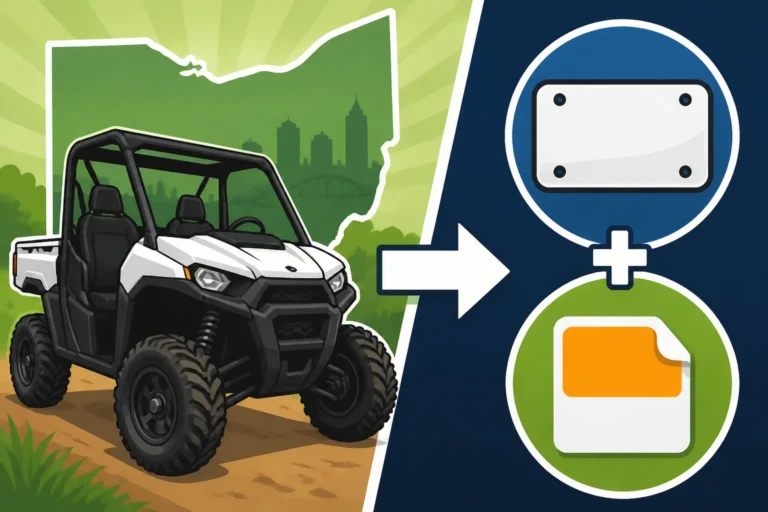
Once you've navigated the titling and registration process, you'll walk away with two critical pieces of hardware for your APV: a physical license plate and a validation sticker. These aren't just decorative items; they are legal requirements that signify your machine is registered and legal for use on designated trails and, in some cases, certain public roads in Ohio.
Why Ohio Issues a Physical Plate
Ohio's decision to issue a physical license plate for APVs, rather than just a decal or sticker, sets it apart from some other states and even other recreational vehicles within Ohio, such as snowmobiles. This plate serves multiple purposes. First, it provides a clear, highly visible identifier for law enforcement, park rangers, and other riders, making it easier to identify a registered machine. Second, the physical plate reinforces the idea that an APV, while off-road focused, is still a registered vehicle subject to state laws.
The plate also helps to deter theft and aids in recovery if a machine is stolen, as it provides a unique identifier beyond the VIN. While it might seem like an extra step compared to a simple sticker, the plate is an integral part of Ohio's enforcement and identification system for APVs. Knowing [Why Ohio Issues a Plate and Not a Decal] helps to explain the state's philosophy behind this choice. The durability and visibility of a plate also mean it's less likely to fade or be damaged by the elements compared to a sticker applied directly to the machine's bodywork.
Proper Display and Visibility of Your Plate and Sticker
Attaching your new APV plate isn't just about bolting it on anywhere it fits. Ohio law has specific requirements for where and how your plate and validation sticker must be displayed to ensure they are always visible. Generally, the plate must be securely attached to the rear of the APV, in a position where it is clearly visible and legible at all times. This means avoiding locations where mud, dirt, or accessories might obscure it.
The small validation sticker, which indicates the current registration cycle, is placed directly on the APV license plate itself. It's usually placed in a designated corner of the plate. This sticker is just as important as the plate, as it confirms your registration is current. An officer checking your machine will look for both the plate and the current sticker. Keeping your [Ohio APV Plates and Validation Stickers] clean and ensuring they aren't bent, faded, or damaged is not just good practice, it's a legal obligation. If your plate becomes unreadable, you might need to order a replacement.
Renewing Your Ohio APV Registration
The three-year cycle for Ohio APV registration offers a nice reprieve from annual renewals, but it's crucial to remember that renewal day will eventually come. Being prepared for your renewal ensures seamless continuation of your riding privileges and avoids any lapse in legal operation.
When and How to Renew
As mentioned, all Ohio APV registrations expire on December 31st of the third year. Ohio typically allows for an early renewal period, usually starting 90 days before the December 31st expiration date. This means you can begin the renewal process as early as October 1st. Renewing early is always a good idea, as it avoids the last-minute rush and ensures your new registration and sticker arrive before the old one expires. You don't want to be caught riding on January 1st with an expired sticker just because you waited until the week before Christmas.
The renewal process is generally straightforward. You can typically renew at any Deputy Registrar's office by providing your current registration information and paying the renewal fee. Some Deputy Registrars might offer online renewal options, but it's always best to check with your local office or the Ohio BMV website for the most current methods. Make sure you confirm the fees and any required documentation before you go. Renewing in October or November is highly recommended to give you peace of mind. For more details on this proactive approach, check out [Renewing an Ohio Registration Ninety Days Early].
What Happens If You Miss the Deadline
Missing the December 31st deadline for your APV registration renewal can lead to some inconvenient and potentially costly consequences. The moment January 1st rolls around and your sticker is expired, your APV is considered unregistered for use on Ohio's public trails and any roads where APVs are legally permitted. Riding an unregistered APV carries a risk of citation and fines, which can quickly negate any perceived savings from delaying the renewal.
Beyond the legal penalties, an expired registration can also cause issues if you're involved in an accident or if your machine is stolen, as it might complicate insurance claims or recovery efforts. While Ohio doesn't typically have a "grace period" for APV registrations after the December 31st expiration, the process to renew remains the same regardless of how late you are. You'll simply pay the standard renewal fee, but you will have been operating illegally during any lapsed period. It's far better to mark your calendar and take advantage of the early renewal window to keep everything above board. Understanding [Ohio Fines for an Unregistered APV] can serve as a strong motivator for timely renewal.
Special Considerations for APV Registration
While the core registration process follows a standard path, there are specific situations that can introduce additional steps or nuances. These often arise when dealing with machines from out-of-state, or when buying and selling a used APV.
Registering an Out-of-State Machine in Ohio
If you're moving to Ohio and bringing your APV with you, or if you're a nonresident planning an extended stay with your machine, you'll need to address its registration status. Ohio does offer some reciprocity for out-of-state machines, meaning if your APV is properly registered in your home state, you might be allowed to ride it on Ohio's designated trails for a limited period, provided your home state also registers APVs and grants similar reciprocity to Ohio residents. However, this is not a blanket rule, and it's essential to check the specific agreements.
For nonresidents who don't have a registration from their home state, or whose home state doesn't have reciprocity with Ohio, there's an option for a [Ohio's Nonresident Temporary Permit]. This permit allows visitors to legally ride on Ohio's trails for a defined short period, usually three days. If you're becoming an Ohio resident, you'll need to go through the full Ohio titling and registration process, just like any other new Ohio APV owner, to ensure your machine is compliant with state law for the long term. This typically means getting an Ohio title first, then proceeding to register it for the three-year cycle.
Buying and Selling a Used APV in Ohio
The process of buying or selling a used APV in Ohio has its own set of requirements, primarily centered around the transfer of the Certificate of Title. For the seller, ensuring a clean title transfer is paramount. This means making sure any existing liens are released and properly signing the title over to the buyer. For the buyer, verifying the title's authenticity, ensuring it matches the machine's VIN, and confirming there are no outstanding liens is critical before completing the purchase. You can read more about [Buying a Used APV in Ohio] for a detailed walkthrough.
A crucial document in any private sale is a bill of sale. While the state primarily focuses on the title for official transfer, a detailed bill of sale protects both the buyer and the seller by documenting the terms of the sale, the purchase price, and the condition of the machine at the time of transfer. For this, tools like LawDepot can be incredibly helpful. They offer customizable bill of sale templates that ensure all necessary information is captured, including the VIN, odometer reading (if applicable), and seller/buyer details. This adds an extra layer of security and clarity to the transaction. After the sale, the buyer is responsible for taking the properly signed title to the Clerk of Courts Title Office to transfer it into their name, and then to a Deputy Registrar for the three-year registration. When [Selling an APV in Ohio], providing a complete and accurate bill of sale created with a trusted resource like LawDepot can significantly smooth the transaction.
The Impact of APV Registration on Trail Access and Safety
It's easy to view vehicle registration as just another bureaucratic hurdle, but for APVs in Ohio, the registration process serves a much larger purpose. It's not just about compliance; it's about funding, safety, and ensuring the sustainability of off-road riding opportunities for everyone.
How Registration Fees Support Ohio's Trails
Every dollar you pay for your three-year APV registration fee goes directly into the State Recreational Vehicle Fund. This fund is specifically earmarked for the development, maintenance, and improvement of off-highway vehicle trails and riding areas across Ohio. Without these fees, the trails you love to ride – from the state forest systems to those managed by the Wayne National Forest – would struggle to remain open, safe, and accessible.
Think about the work involved: clearing fallen trees, repairing washouts, maintaining signage, and improving parking areas. All of this requires funding, and your registration fees are a primary source. So, when you pay your fee every three years, you're not just getting a plate; you're directly investing in the future of Ohio's off-road riding scene. This system ensures that the riders who use the trails are the ones contributing to their upkeep, creating a self-sustaining model for outdoor recreation. Understanding [Where Ohio APV Registration Money Goes] can give you a deeper appreciation for this connection.
Safety and Legal Implications of Proper Registration
Beyond funding, proper APV registration in Ohio is a fundamental aspect of responsible riding and compliance with state law. Operating an unregistered APV on designated trails or any public land where registration is required can lead to citations, fines, and even the impoundment of your machine. These are not minor penalties and can significantly detract from your riding experience. Law enforcement officials and park rangers actively monitor for unregistered vehicles, especially at trailheads and within riding areas.
Furthermore, registration serves as an important form of identification. In the event of an accident, a medical emergency, or if your machine is lost or stolen, having a current registration provides official proof of ownership and facilitates communication with authorities. It's also often a requirement for insurance purposes, especially if you plan to ride on any public roads where APVs are permitted. Having your current registration card readily available, perhaps secured in a waterproof pouch on your machine, is just as important as the physical plate. In a world where legal documentation can sometimes feel overwhelming, utilizing resources like LawDepot for personal records such as an affidavit of ownership can provide valuable backup documentation, even if not strictly required by the state for registration purposes.
Ohio APV Registration Cycle at a Glance
| Aspect | Details | Key Action |
|---|---|---|
| Duration | Three years from the date of initial registration. | Mark your calendar for renewal. |
| Expiration Date | December 31st of the third year, universally. | Plan to renew well before year-end. |
| Renewal Window | Generally, 90 days prior to December 31st (starting October 1st). | Don't wait until the last minute! |
| Location | Deputy Registrar's office for registration; Clerk of Courts for titling. | Know which office handles which task. |
| Fees | Primary registration fee + Deputy Registrar service fee. (Titling is separate) | Budget for both titling (one-time) and registration (every 3 years). |
| Output | Physical license plate and validation sticker. | Display clearly on the rear of your APV. |
| Purpose | Funds trail maintenance, legal identification, safety compliance. | Contributes to the future of Ohio riding. |
Disclaimer
This article is for general informational purposes only and does not constitute professional advice. Laws, prices and regulations vary by location and change over time. Consult a qualified professional for guidance on your specific situation.