Wayne National Forest OHV Permit Cost
The cost of riding in Wayne National Forest can be confusing because the forest OHV permit is separate from an Ohio ATV registration plate. The right budget depends on how long you plan to ride and how many people need permits. Here’s how the permit cost works, what it covers, and what to check before you travel.
What the Wayne National Forest OHV permit costs
Wayne National Forest uses more than one permit duration, so the main cost decision is whether a short visit or repeated riding makes more sense. The available options have included a three-day permit and a season permit. Fees can change, so confirm the current prices and terms with the USDA Forest Service before buying.
The permit is generally a rider-based cost, not a single fee that automatically covers everyone in a group. If several people will ride, check whether each rider needs a separate permit and whether passengers are covered. A family or group should work out the total based on the number of riders who must have permits, rather than assuming one pass covers every machine or person.
| Permit option | Typically suits | What to confirm before buying |
|---|---|---|
| Three-day permit | A short visit or an occasional weekend | Current fee, which days it covers, and whether the dates must be consecutive |
| Season permit | Riders planning more than one visit | Current fee, season dates, and whether each qualifying rider needs a separate permit |
A three-day permit can be practical if your trip is brief and you do not expect to return during the season. A season permit may make more sense if you plan several visits, but compare the current prices against your actual riding plans. Do not assume that a season permit is automatically the best value: a rider who makes only one short trip may pay less with a short-term option.
The total can also vary with your group. If two people ride separate machines, check the permit requirement for both people. If one person rides and another travels as a passenger, confirm whether the passenger needs a permit under current forest rules. The distinction matters because the permit is not necessarily a vehicle tag shared by everyone who uses the machine.
For the current fee and purchase terms, check the Forest Service information for Wayne National Forest or contact a ranger district before leaving home. Confirm the permit’s valid dates, eligibility, and any rules about displaying or carrying proof of purchase. A price shown on an old forum post, an archived page, or a trail discussion may no longer be current.
What the forest permit covers, and what it does not
The Wayne National Forest OHV permit is an access requirement for riding the forest’s designated OHV routes. It is separate from state registration. For an Ohio-registered machine, the Ohio plate and registration serve a different role from the Wayne permit. The plate does not replace the forest pass, and buying the forest pass does not register the machine for Ohio.
That distinction is easy to miss when planning a trip. A rider may need to satisfy both sets of requirements: have a machine that is properly registered or otherwise eligible to ride, and have the required Wayne National Forest permit. The details of the state plate system are covered in Why the Ohio Plate Is the Trail Permit, while How the Wayne National Forest OHV Permit Works explains the separate forest access requirement.
The permit also does not open every road or trail in the forest to OHVs. It applies to the routes and areas authorized for that use. A permit is not permission to ride off the marked route, through a closed gate, or on a road that does not allow OHVs. Check the route map and current closures before you unload. Which Trails a Wayne Forest Pass Opens is useful for understanding the limits of access.
Think of the permit as one part of trip readiness rather than a general license to ride anywhere on public land. You still need to follow route signs, seasonal closures, vehicle requirements, and rider safety rules. Forest routes may be closed or altered because of conditions or management work, so a pass by itself does not guarantee every route will be open on the day you arrive.
A pass also does not automatically cover special events, organized activities, or other uses that may require separate authorization. If you are planning a group event rather than a regular recreational ride, check with the Forest Service about whether additional permission is needed.
Who needs a permit and how reciprocity fits in
Permit requirements can depend on who is riding, not just on where the machine is registered. Before buying, identify every person who will operate an OHV and check whether any passengers are subject to a separate requirement. Do not assume that one permit covers a household, a group, or all machines in a trailer.
Passengers are a common source of uncertainty. A person who is not driving may still be subject to a permit rule. Check the current Forest Service directions for riders and passengers, especially when a group includes adults and children. Why Every Ohio Passenger Over 16 Needs a Pass addresses this specific question, but confirm the current rule before relying on an older summary.
Out-of-state registration is another separate issue. Ohio’s recognition of another state’s registration may help establish that a visiting machine is properly registered for riding in Ohio, but reciprocity does not necessarily waive a Wayne National Forest permit. The state registration question and the federal forest access question are related, but they are not interchangeable. See Ohio APV Reciprocity With Other States for the state-side issue and check the forest’s rules for the permit requirement.
Visitors should also avoid treating a temporary state permit as a substitute for a forest pass. A temporary Ohio permit may address state registration for an eligible visitor, while the Wayne permit addresses access to designated routes on national forest land. If you are visiting from a state that does not require comparable registration, confirm what documentation Ohio requires as well as what Wayne National Forest requires. The Ohio Temporary Permit for Visitors explains that separate state process.
A practical way to avoid a costly mistake is to make a rider-by-rider checklist:
- List each person who will operate an OHV and any passengers.
- Confirm the current Wayne National Forest permit rule for each person.
- Decide whether the short-term or season option fits each rider’s plans.
- Verify that each machine meets the applicable registration and equipment requirements.
- Check that the routes you plan to use are open to your machine and riding dates.
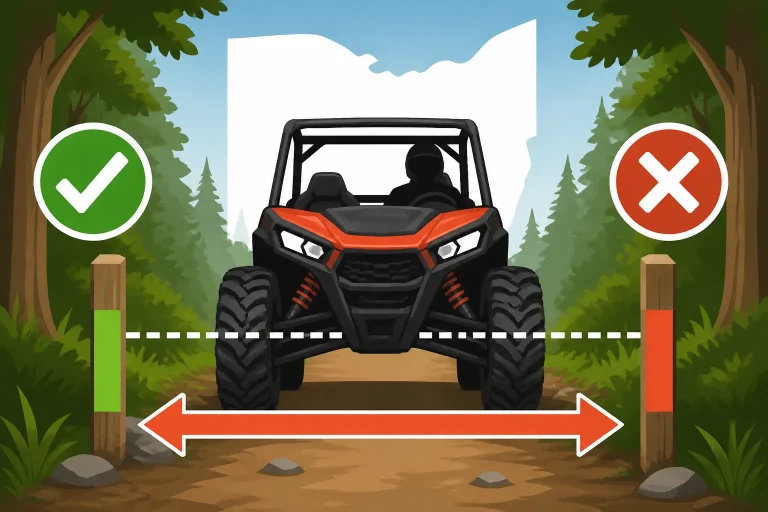
For wider machines or other vehicles with particular restrictions, check route limits rather than assuming a permit makes the vehicle eligible everywhere. Ohio state forest rules and Wayne National Forest route rules are not identical. Ohio Rules for Riding a National Forest and Ohio’s 62 Inch State Forest Limit can help clarify the differences between the two land systems.
How to buy the permit and budget the full trip
Permits may be available through Forest Service channels and authorized sellers. Availability and purchase methods can change, so use the current Wayne National Forest information to confirm where to buy, whether an online purchase is available, and what proof you must bring. Where Wayne Passes Are Sold covers the purchase locations and options.
Buying ahead can reduce uncertainty, particularly if you are arriving outside normal office hours or traveling to a remote trailhead. Before purchasing, make sure you select the correct permit duration and understand when its validity begins and ends. Save the confirmation or receipt and follow the Forest Service instructions for carrying or displaying proof. If the permit is tied to a particular rider, keep the proof with that rider rather than assuming it belongs only with the vehicle.
The permit is only one line in a trip budget. You may also have transportation costs, fuel, food, lodging, and machine maintenance. Those costs are not part of the forest permit fee, and a state registration charge is a separate expense. Riders staying overnight should check lodging or camping arrangements independently; a forest OHV permit should not be assumed to include a campsite.
Before setting off, check the current trail map and closure information. Route conditions, work activity, weather, and seasonal restrictions can affect where you can ride. A trip planned around one route may need adjustment if it is closed. Ohio Trail Maps From ODNR can help with Ohio riding-area planning, but use Forest Service information for Wayne National Forest routes and permit details.
If you are comparing a short-term pass with a season pass, use the actual fee currently posted by the Forest Service and count the visits you realistically expect. Then multiply by the number of riders who need their own permits. That gives you a more useful comparison than looking at the cost per machine or assuming a group pass exists.
Finally, check the rules shortly before travel, not only when you first plan the trip. Confirm the fee, valid dates, rider coverage, purchase method, and open routes. Keeping those details straight helps prevent the two most common budgeting errors: treating an Ohio plate as the forest pass, and assuming one person’s pass covers everyone in the group.
Disclaimer
This article is for general informational purposes only and does not constitute professional advice. Laws, prices and regulations vary by location and change over time. Consult a qualified professional for guidance on your specific situation.