The $20 Three-Day Wayne National Forest Pass
A short visit to Wayne National Forest can involve more than loading the machine and buying a pass. Riders need to know who the three-day permit covers, which trails it opens, and how it fits with Ohio registration or an out-of-state plate. This guide explains how to plan around the permit and what to confirm before you ride.
What the Three-Day Pass Covers
The Wayne National Forest OHV pass is a separate permit for riding designated off-highway vehicle trails in the forest. It is not a general ticket to ride anywhere on federal land, and it does not replace vehicle registration or other legal requirements.
The key word is designated. A valid pass does not make a closed route, an unmarked path, or a road open to ATV or UTV use. Before setting out, check which routes are open for your machine and whether there are temporary closures or restrictions. The forest’s permit information explains the basic permit system, while Which Trails a Wayne Forest Pass Opens can help you sort out where it applies.
The three-day option is intended for a shorter visit. Check the current permit terms before purchase to find out exactly how its validity dates are defined. A three-day permit might be tied to selected calendar dates or otherwise have specific start and end rules. Do not assume it means any three days you choose after purchase, or a rolling period of exactly seventy-two hours.
The dollar figure in this article’s title is not a guarantee of the current checkout price. Fees and permit terms can change, so confirm the current cost and how to buy directly with Wayne National Forest or its authorized permit seller before you travel.
A three-day pass generally makes sense when you are visiting briefly and want permission for the forest’s designated OHV routes. It is not the same as an annual permit, and it does not necessarily cover other people in your group. If you are deciding between a short-term permit and a longer-term option, compare the current terms rather than relying on old trip notes or a price you remember.
| Item | What it is for | What it does not replace |
|---|---|---|
| Wayne National Forest OHV pass | Required forest permit for using designated OHV routes, subject to current rules | Ohio registration, accepted home-state registration, or age and operating requirements |
| Ohio APV registration | Ohio’s registration requirement for eligible machines used where registration is required | The separate Wayne National Forest permit |
| Home-state registration | May be relevant to a visitor’s ability to operate in Ohio, depending on the state and current reciprocity rules | The Wayne National Forest permit |
| Operator credential | Helps establish that the person operating a machine meets applicable age and licensing rules | Registration or trail permission |
Think of these as separate checks, not interchangeable paperwork. A rider can have a properly registered machine and still need the forest pass. Likewise, buying a Wayne permit does not automatically make an unregistered machine legal to ride.
Who Needs a Pass and Whether Each Person Needs One
A common planning mistake is to buy one permit for a group and assume it covers everyone riding along. Wayne National Forest’s permit rules are generally applied to individual riders who meet the applicable age threshold, rather than treating the pass as a group ticket for a machine. Riders aged sixteen or older should plan on needing their own pass, including a passenger where the passenger rule applies.
Confirm the current age and passenger requirements before departure. A passenger’s age does not automatically make the passenger exempt from all forest requirements, and the pass itself does not determine whether that person may ride as a passenger. Do Passengers Need a Wayne Forest Permit? addresses that distinction, while Why Every Rider Needs Their Own Wayne Forest Pass explains why one person’s permit should not be treated as coverage for the whole group.
Separate the questions when you make your checklist:
- Does this person need an individual forest pass? Check the current permit rule for each rider, including passengers.
- May this person operate the machine? Age, license, and supervision rules may apply independently.
- Is this person allowed to ride as a passenger on this machine? Check the machine’s passenger capacity and the applicable rules.
- Is the machine eligible and properly registered for the trip? A permit does not settle that question.
- Is the planned route open to this type of machine? Width limits and route restrictions can matter.
This matters most when a group has mixed ages or multiple machines. One adult may buy permits for the party, but that does not mean the adult’s permit can be shared. If you are arranging a ride for a family, check the age-specific forest requirements in advance and do not assume a child’s status follows the adult’s. Ohio Forest Access for Riders Under 16 is useful for understanding how youth access rules can differ from the permit question.
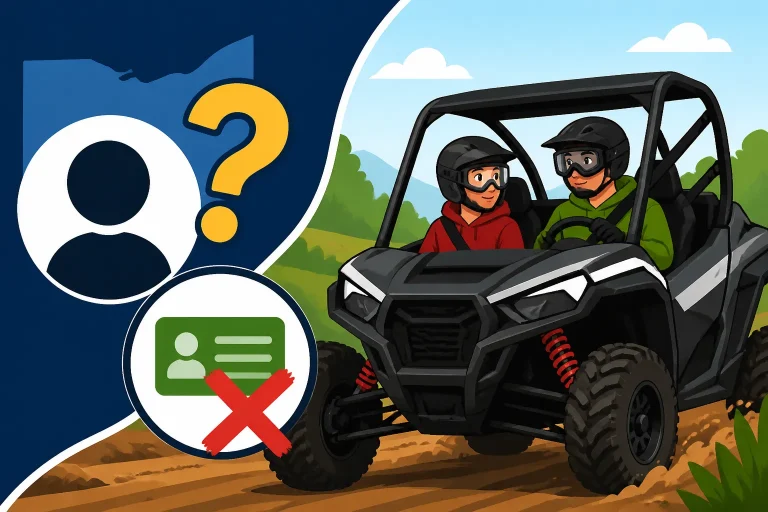
There is also a practical difference between a permit and a driver’s license. A permit is permission to use certain forest routes under the permit rules. It does not itself qualify someone to operate a machine. For age and licensing questions, check the relevant forest requirements before planning around a young or inexperienced rider. Can You Ride in Wayne National Forest Without a License? covers that separate issue.
If your group is renting machines, ask the rental operator exactly what is included. A rental agreement may address the vehicle’s registration or equipment, but do not assume it includes an individual forest pass for each rider. Confirm the pass requirement, whether the renter must buy it separately, and who is responsible for carrying proof during the ride. Does a Rental Include the Forest Pass? is a helpful follow-up if your trip involves rented equipment.
How the Pass Fits With Ohio Registration and Reciprocity
The Wayne pass and machine registration solve different problems. The pass is for access to designated Wayne National Forest OHV routes. Registration establishes that the machine meets the applicable registration requirements for riding in Ohio. You may need both.
For an Ohio resident, the state APV plate is not a substitute for the Wayne National Forest permit. For an out-of-state visitor, a valid home-state registration may be relevant to Ohio’s rules, but it does not automatically waive the separate forest permit requirement. Check the current rules for your home state and Ohio before assuming your plate is enough. Ohio Reciprocity for Out-of-State Machines explains why reciprocity and a federal forest permit are separate questions.
Visitors should also check whether their home state registers the machine category they are bringing. Ohio’s treatment of an out-of-state machine can depend on the visitor’s circumstances and the requirements that apply to the machine. If your state does not issue the kind of registration Ohio expects, you may need to look into an Ohio temporary permit. Start with The Ohio Temporary Permit for Visitors and confirm the current visitor rules with the appropriate Ohio office.
A simple way to keep the paperwork straight is to check each requirement separately:
- Confirm the machine’s registration status. Know which state issued the registration and whether it is current.
- Confirm Ohio’s visitor rules. Do not assume an out-of-state plate is accepted in every circumstance.
- Buy the Wayne National Forest permit required for each rider. Check the current age, passenger, and validity rules.
- Check operator requirements. Registration and a forest pass do not substitute for any required license or age qualification.
- Check route eligibility. Make sure the machine can use the routes you plan to ride.
Keep the registration and forest permit information accessible while riding. Follow the forest’s directions for carrying or displaying proof; do not assume that a phone photo is accepted in place of a required original or issued permit. If your paperwork is digital, have a backup plan for poor cell service or a drained battery.
For a visit involving multiple jurisdictions, treat a state line as a reason to check, not a reason to assume. The machine’s home registration, Ohio rules, and Wayne’s permit requirement can all operate at once. That is why buying the forest pass alone is not a complete compliance plan.
Buying the Pass and Choosing the Right Dates
Use Wayne National Forest’s current permit information or contact the appropriate ranger district to verify the seller, permit options, and the dates covered. You can also review Where to Buy a Wayne Forest OHV Permit for practical buying routes. Avoid relying on an old screenshot, an expired forum post, or a friend’s recollection of how the pass worked on a previous trip.
Before purchasing, have the following details ready:
- Your planned riding dates
- The number and ages of riders, including passengers
- The machine types and their registration status
- The routes or trail system you hope to use
- Whether anyone in the group needs an accessibility accommodation
- The method you will use to carry or display proof of the permit
Choose dates with a little care. A three-day option can be a poor fit if your travel plan includes a late arrival, a rest day, or a weather delay. Verify whether the permit’s days are consecutive and whether the start date is selected at purchase. If a storm, mechanical problem, or family schedule change affects the trip, do not assume the permit can be shifted or refunded; ask the issuing authority about its current rules before paying.
Buying before leaving home can save time, but only if you understand what you bought. Read the confirmation, check that the dates are right, and make sure each required rider has an individual permit. If you buy in person, keep the receipt and any permit materials together. If the permit is issued as a physical tag, follow the attachment instructions. If it is an electronic authorization, follow the directions for showing it during a check.
It is useful to keep a simple trip folder with permits, registration details, emergency contacts, and a map. A water-resistant document pouch can help protect paper copies from rain and trail mud; if you buy one through Amazon, check that it closes securely and fits the documents you need to carry. A pouch is only a storage aid, not a substitute for following the permit’s official display or proof instructions.
A Pre-Ride Checklist for a Short Wayne Visit
A three-day permit is only one part of a safe and legal trip. Before unloading, confirm that the system is open, that your machine is permitted on your chosen routes, and that every rider has the documents and equipment they need.
Check the route and conditions
Use official forest information to verify trail openings and temporary closures close to your ride date. Conditions can change after heavy rain, maintenance work, fire restrictions, or other forest management needs. A route shown on a map may still have a temporary closure. Review Ohio Trail Closures to Check First and read the current trailhead notices when you arrive.
At the trailhead, pay attention to signs and posted instructions. They may identify route limits, permitted machine types, closures, or safety information that is not obvious from a general map. What the Trailhead Board Tells You Before a Ride is a useful reminder to treat local notices as part of trip planning, not as something to glance at after you have already unloaded.
Check the machine and the paperwork
Make sure the registration is current and appropriate for the trip. Check that the machine’s plate, VIN, or other required identifying details are legible, and carry the paperwork specified by the relevant authority. Confirm that the permit is valid for your dates and that each rider who needs one has it.
For a group, a quick roll call helps prevent an avoidable problem at the trailhead:
- Name each rider and passenger.
- Confirm who needs an individual Wayne permit.
- Match each permit to the correct person and dates.
- Confirm the vehicle’s registration and any required visitor documentation.
- Make sure each rider knows the route and meeting point.
If you are buying equipment before your trip, pay attention to safety requirements rather than relying on a product listing alone. For example, Amazon can be a convenient place to compare helmets, but check for the required certification label and make sure the helmet fits the rider. A listing description or image is not proof that a particular helmet meets a forest rule.
Pack basic repair and safety items appropriate to your machine and riding conditions. A tire repair kit, first-aid supplies, water, and a charged phone can help with ordinary setbacks, but none replaces the need to stay on open routes or follow forest rules. If you shop for a compact tire kit on Amazon, check that it suits your tire type and that you know how to use it before the trip.
Plan for weak service and changing conditions
Cell coverage can be limited in some riding areas. Download or carry an appropriate map, agree on a meeting place, and make sure the group knows what to do if separated. Do not rely on being able to look up permit details or trail directions online once you are deep into a ride.
A paper copy of key documents can be useful if a phone loses power or service. If you keep copies digitally, protect personal information and remember that a screenshot may not satisfy a rule requiring a permit to be displayed or carried in a specific way. Use the method named in the official permit instructions.
Finally, leave enough time to complete the trip without rushing. A short-term permit does not make a closed trail open, extend riding hours, or justify pushing on after weather or fatigue makes conditions unsafe. Check the current trail status before each ride day, not just when you first buy the permit.
Common Mistakes to Avoid
Treating the pass as an Ohio registration. The Wayne permit gives access under forest rules; it does not register the machine for Ohio. Check both requirements.
Assuming one pass covers a whole family or group. Permit requirements may apply to each rider individually. Confirm the current rule for every person, including passengers.
Assuming any three days will work. Check how the permit’s valid dates are set and whether the days must be consecutive before selecting a start date.
Relying on the amount printed in an old article or saved note. Verify the current fee and purchase terms with the forest or its authorized seller. The title’s dollar figure should not be treated as a guaranteed amount at checkout.
Riding a route because it appears on an old map. Maps can be outdated, and routes can close. Use current official information and observe posted signs.
Assuming a rental includes permits. Ask the rental business what it supplies and what each rider must buy or carry separately.
Confusing permission with eligibility. A valid pass does not by itself establish that a rider meets age, licensing, passenger, equipment, or registration requirements. Check those separately.
A little preparation makes the short-term permit easier to use as intended. Confirm the current terms, buy the right permit for each rider, and treat the forest pass as one piece of a broader trip checklist—not as a substitute for registration, route research, or safe riding.
Disclaimer
This article is for general informational purposes only and does not constitute professional advice. Laws, prices and regulations vary by location and change over time. Consult a qualified professional for guidance on your specific situation.