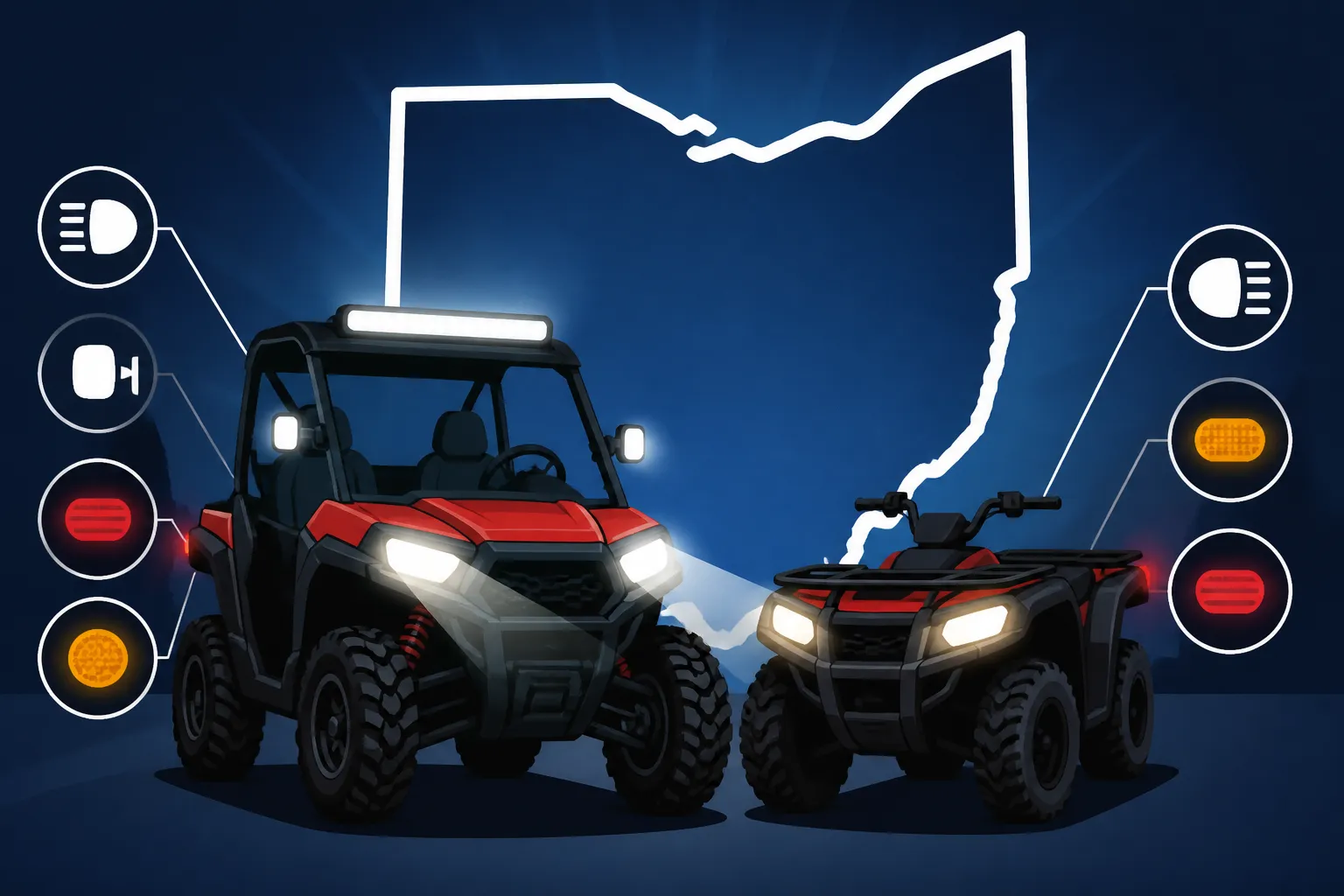
Ohio Lighting Requirements for APVs
Let's be honest, figuring out what lights you need on your ATV or UTV in Ohio can feel like navigating a maze blindfolded. You've got your machine, you're excited to hit the trails or even explore those local roads that are finally open, but then the questions hit: Do my stock lights cut it? Do I need turn signals? What about that massive light bar I bought? This guide is here to untangle all the confusion surrounding Ohio's lighting requirements for All-Purpose Vehicles (APVs), so you can ride with confidence and stay on the right side of the law.
The Basics of Ohio APV Lighting: What You Need to Know Off-Road
Before we even think about touching pavement, it's crucial to understand the baseline lighting requirements for simply riding your ATV or UTV on designated trails or private land in Ohio. While the rules are generally more relaxed than for on-road use, visibility and safety are still paramount, especially as daylight fades.
Minimum Lighting for Trail Riding
When you're out on the trails, whether it's in one of Ohio's beautiful state forests or a private riding park, your machine needs to be visible. The fundamental requirement for any APV in Ohio, regardless of where it's ridden, is to have at least one working headlight and one working taillight. These aren't just for you to see; they're for others to see you, which is critical for preventing collisions on shared trails or in staging areas.
Think about it: you're coming around a blind corner on a dusty trail, and another rider is approaching. If their lights aren't working, or if yours aren't, you've got a recipe for disaster. The headlight illuminates the path ahead, helping you spot obstacles, dips, and rises. The taillight, typically red, ensures that riders behind you know where you are, which is especially important during group rides or when stopping unexpectedly. These lights are part of the basic safety equipment every machine should have, right alongside a properly functioning exhaust system that includes a spark arrester. While the state doesn't typically inspect lights for trail-only machines, a deputy or forest ranger can certainly cite you for unsafe operation if your lights are non-existent or clearly broken, especially after sunset.
Riding After Dark on Ohio Trails
Okay, so you've got your basic headlight and taillight. That's great for daytime, but what happens when the sun dips below the horizon and you're still miles from the trailhead? Ohio law states that an APV cannot be operated from a half-hour before sunrise to a half-hour after sunset without having its headlight and taillight illuminated. This isn't just a suggestion; it's a legal requirement.
When you're riding in low light or full darkness, the quality and aiming of your headlight become much more critical. A standard stock headlight might be sufficient for casual trail riding, but many experienced riders will tell you that upgrading to brighter bulbs or adding auxiliary lighting can significantly improve your night vision and safety. Imagine navigating a tricky section of trail with roots and rocks, or trying to read a trail marker after dark. A well-aimed, powerful headlight makes all the difference. While auxiliary lights, like LED light bars, aren't legally required for off-road use, they are widely used by riders for enhanced visibility in challenging nighttime conditions. Just remember that the goal is to see and be seen, ensuring you can react to changing terrain and avoid wildlife that might wander onto the trail. It's a matter of practicality and personal safety, making those night rides not just permissible, but genuinely enjoyable and safe.
Stepping Onto the Road: Ohio's Specific Lighting Requirements for APVs
This is where things get a bit more complex, and where many riders find themselves scratching their heads. While APVs aren't generally "street legal" across the board in Ohio, certain counties and townships have passed resolutions to open their roads to these machines. If you plan to take your APV on any public road where it's permitted, you absolutely must meet specific lighting standards that go beyond just basic trail visibility.
Headlights and Taillights for On-Road Use
When your APV rolls onto a public road in Ohio, your headlights and taillights need to meet standards similar to those for motorcycles or other low-speed vehicles. For headlights, this means you typically need at least one, but often two, that are capable of emitting a white light visible from a significant distance – usually 500 feet or more. More importantly, these headlights must have both a high beam and a low beam function. The low beam is essential for not blinding oncoming traffic, while the high beam provides necessary illumination on unlit roads.
Your taillight must emit a red light visible from at least 500 feet to the rear. Additionally, a working brake light that illuminates when you apply the brakes is non-negotiable. This red light must be activated by the brake control and clearly signal to drivers behind you that you are slowing down or stopping. These requirements are in place for the safety of everyone on the road, ensuring that your intentions are clearly communicated, especially in traffic. If you're riding in Washington County, for example, where many roads are open to APVs, failing to have proper head, tail, and brake lights could quickly lead to an interaction with a deputy. This isn't just about avoiding a ticket; it's about making sure other vehicles can see you and react appropriately, especially during twilight hours or at night.
Turn Signals and Hazard Lights
Now, this is a big one for many APV owners considering road use. While ATVs might not universally require turn signals for all permissible road use in Ohio, many UTVs, due to their size and design, often do. If your local ordinance specifies that your APV must comply with motor vehicle equipment standards for road use, then turn signals become mandatory. These signals must be amber in color, clearly visible from the front and rear, and operated by a switch that allows you to indicate a left or right turn.
For a UTV, which often has a more car-like steering wheel and seating, adding turn signals is a crucial step towards road legality. Companies like SuperATV offer comprehensive turn signal kits that integrate seamlessly with many popular UTV models, providing not just the lights but also the necessary wiring, switches, and sometimes even a horn, all designed to meet these road-use specifications. And let's not forget hazard lights; while not always explicitly required, having them is a smart safety feature for any unexpected stops on the side of the road. These provide an extra layer of visibility if you break down or need to pull over for an emergency. [Ohio Equipment Rules for a UTV on a Road] delve into this more deeply, but the takeaway is clear: if you're on the road, communicate your turns.
License Plate Illumination
This is a detail often overlooked by riders getting their APV ready for the road. Ohio law requires that your rear license plate be illuminated by a white light when you're operating your machine on public roads between a half-hour after sunset and a half-hour before sunrise, or at any other time when visibility is poor. The purpose of this light is simple: to make your license plate clearly legible from a distance.
If you've gone through the process of getting your APV registered and titled, you've already invested in making your machine compliant. Don't let a small detail like a non-illuminated license plate trip you up. Many aftermarket taillight assemblies or license plate mounts come with integrated LED lights for this very purpose, or you can easily add a small, inexpensive LED strip. It's a minor addition that demonstrates full compliance and ensures that your vehicle identification is visible to law enforcement, especially if you're riding during periods of reduced visibility. [Ohio APV Plates and Validation Stickers] are crucial, and making sure that plate is lit is just as important.
Beyond the Essentials: Enhancing Visibility and Compliance
Meeting the minimum requirements is one thing, but truly prioritizing safety and ensuring your machine is as visible as possible on and off the trails involves a few more considerations. Sometimes, it's about adding equipment that goes beyond the letter of the law but significantly enhances your peace of mind and protection.
Reflectors and Side Markers
While not always explicitly mandated for all APVs in all situations, reflectors are an incredibly inexpensive and effective way to increase your machine's passive visibility. Red reflectors on the rear and amber reflectors on the sides can make your APV much more noticeable to other vehicles, especially when parked or during low-light conditions when your active lights might not be on. For wider machines like UTVs, side markers, which can be either reflective or illuminated, are particularly beneficial. They help delineate the full width of your vehicle to other drivers, reducing the risk of being sideswiped or misjudged, especially when you're crossing a road or traveling on a narrow shoulder.
Consider the times you might be staging your machine in a dimly lit parking lot, or pulling off to the side of a township road to check a map. In these scenarios, static reflectors can be your best friend. They don't require power and offer a constant visual cue to anyone approaching. Many OEM plastics already incorporate some reflective material, but adding additional reflective tape or stick-on reflectors is a simple, effective upgrade for heightened safety.
Auxiliary Lighting and Off-Road Light Bars
Ah, the mighty light bar! These powerful LED fixtures have become incredibly popular in the off-road community, and for good reason: they turn night into day. While fantastic for illuminating vast stretches of trail or working in the dark, it's absolutely critical to understand their legal status when it comes to public roads in Ohio. Generally speaking, high-intensity auxiliary lights, like most LED light bars or powerful spot/flood lights, are designed strictly for off-road use.
Operating these lights on a public road in Ohio is typically illegal and can result in a significant fine. They are simply too bright and can temporarily blind oncoming drivers, creating a severe safety hazard. If you have an auxiliary light bar installed, it should either be covered with an opaque cover when on public roads, or wired with a separate switch that clearly indicates it's off. Many riders install their light bars with a separate switch and only activate them once they are safely off public roadways and on private land or designated trails. Companies like SuperATV offer a wide range of auxiliary lighting options, from small cube lights to full-width light bars, but they also emphasize responsible and legal use. Make sure your auxiliary lighting is always handled with care and consideration for others.
Maintenance and Inspection of Your APV Lights
All the fancy lights in the world won't help if they don't work. Regular maintenance and inspection of your APV's lighting system are paramount, whether you're a trail warrior or an occasional road rider. Before every significant ride, take a few moments to walk around your machine and visually inspect all your lights:
- Headlights: Are both beams working? Are they aimed correctly (not too high, not too low)?
- Taillights: Is the red light bright and clear?
- Brake Lights: Do they activate instantly when you press the brake pedal/lever?
- Turn Signals (if applicable): Do both front and rear signals on each side flash clearly? Do they flash at a consistent rate?
- License Plate Light (if applicable): Is your plate clearly illuminated?
- Wiring: Check for any loose connections, frayed wires, or corrosion, especially in areas exposed to mud and water.
Replacing a bulb, cleaning a dirty lens, or tightening a loose connection can prevent a breakdown in visibility and potentially an unwanted interaction with law enforcement. This routine check is even more critical if you're taking a UTV for its [Ohio UTV Inspection Before Registration]. A failed light will almost certainly mean a failed inspection, so preventative maintenance is key to staying safe and compliant.
The Difference Between ATVs and UTVs in Lighting Requirements
It's common to lump "ATVs and UTVs" together, but when it comes to Ohio's road laws, these two categories often diverge significantly in their lighting requirements. This distinction is crucial for understanding what modifications you might need to make to your machine for legal road use.
Why UTVs Often Have More Stringent Rules
UTVs, or side-by-sides, are generally larger, heavier, and often carry passengers, making them more akin to small cars or utility vehicles than the traditional single-rider ATV. Because of this, when Ohio counties or townships pass resolutions to open roads to APVs, UTVs often face stricter equipment requirements, including more comprehensive lighting. For instance, while an ATV might only need basic headlights, taillights, and a brake light for limited road crossings, a UTV intended for extensive road use is much more likely to be required to have:
- Dedicated Turn Signals: Front and rear, amber in color.
- Hazard Lights: For roadside emergencies.
- Mirrors: Side mirrors and a rearview mirror.
- Horn: An audible warning device.
- Windshield and Wipers: If equipped with a full cab.
These requirements bring UTVs closer to the standards of low-speed vehicles or even mini-trucks, reflecting their larger footprint and increased potential for interaction with traditional road traffic. The logic is that the more a machine resembles and performs like a conventional road vehicle, the more it should adhere to similar safety and communication standards. This means that a stock UTV might need several upgrades to legally travel on open Ohio roads. [Ohio UTV Road Equipment List] is a great resource if you're looking to make your side-by-side road-ready.
Aftermarket Solutions for Compliance
The good news for APV owners in Ohio is that the aftermarket industry has responded robustly to these evolving road-use laws. If your ATV or UTV doesn't come from the factory with all the necessary lighting and safety equipment for legal road use, there are plenty of options to help you achieve compliance. Companies like SuperATV specialize in creating bolt-on kits that are designed to meet these specific requirements without needing extensive fabrication.
For UTVs, you can find comprehensive street-legal kits that bundle everything you need: turn signals (with a column-mounted switch and flasher relay), a horn, a license plate bracket with LED illumination, and sometimes even side mirrors. These kits are often designed to be plug-and-play for specific makes and models, making the installation process much simpler for the average rider. For ATVs, while the requirements are generally less extensive, you can still find universal turn signal kits or brake light kits that enhance your machine's road-worthiness. Investing in these aftermarket solutions means you don't have to guess or piece together components, ensuring that your machine is properly equipped to navigate those newly opened county and township roads safely and legally. Remember, the goal isn't just to pass an inspection, but to be truly visible and predictable to other drivers.
| Lighting Feature | Off-Road (Trails/Private) | On-Road (Where Permitted) – ATV | On-Road (Where Permitted) – UTV |
|---|---|---|---|
| Headlight(s) | 1 (illuminated after dark) | 1-2 (hi/low beam, illuminated) | 1-2 (hi/low beam, illuminated) |
| Taillight(s) | 1 (red, illuminated after dark) | 1 (red, illuminated) | 1 (red, illuminated) |
| Brake Light(s) | Recommended | 1 (red, activates with brake) | 1 (red, activates with brake) |
| Turn Signals | Not Required | Check local ordinance | Usually Required |
| Hazard Lights | Not Required | Recommended | Recommended |
| License Plate Light | Not Applicable | Required (white light) | Required (white light) |
| Reflectors | Recommended | Recommended (sides/rear) | Recommended (sides/rear) |
| Auxiliary Light Bar | Allowed (off-road only) | Must be covered/off | Must be covered/off |
Disclaimer
This article is for general informational purposes only and does not constitute professional advice. Laws, prices and regulations vary by location and change over time. Consult a qualified professional for guidance on your specific situation.