Why Ohio Has No Statewide Road Right
It's incredibly frustrating when you want to take your ATV or UTV out for a spin, maybe just a short hop down the road to a neighbor's house or to connect to a different trail, only to be met with confusing, patchwork rules. Many riders dream of simply being able to hop on their machine and ride legally on any public road, but in Ohio, that's just not the reality. This guide dives deep into why Ohio operates under a unique system of local control for off-highway vehicles on public roads, and what that means for you, the rider.
The Frustration of Ohio's Fragmented Road Laws for ATVs and UTVs
For anyone who owns an all-purpose vehicle (APV) in Ohio, the idea of a simple, statewide "street legal" designation is a distant dream. Instead of a clear, consistent set of rules that apply uniformly across all 88 counties, riders are faced with a complex web of local ordinances, resolutions, and state statutes that often contradict or confuse. This fragmented approach can turn what should be a straightforward outing into a research project, trying to figure out if the particular stretch of asphalt you want to traverse is even permissible.
No Blanket "Street Legal" Status
Imagine you've just bought a shiny new UTV, complete with all the bells and whistles—turn signals, a horn, a windshield—thinking you're all set to ride it on public roads. You might assume that once it passes some sort of state inspection, you're good to go anywhere. But in Ohio, there is no such thing as a blanket "street legal" status for APVs that automatically grants you access to every road in the state. Unlike cars or motorcycles, which have clear statewide road rights, APVs fall into a different category. The state essentially defers the decision to open roads to APVs down to the local level. This means that a road that is perfectly legal for your machine in one township or county could be strictly off-limits just a few miles down the road in the next jurisdiction. It’s enough to make you scratch your head and wonder, "Why can't this be simpler?" This decentralized authority is a fundamental reason [Why Ohio Has No Statewide Road Right].
The Dream of Riding from Home to Trail
Every rider has probably envisioned it: rolling your machine right out of your driveway, down a quiet country road, and onto your favorite trail system without ever having to load it onto a trailer. It’s the ultimate convenience, saving time, effort, and fuel. However, because Ohio lacks a statewide road right for APVs, this dream often remains just that—a dream. For many, riding from home to trail involves navigating roads where APVs are explicitly prohibited, or trying to understand complex local ordinances that might allow it on some roads but not others. This reality forces most riders to continue using trailers to transport their machines, even for relatively short distances, just to ensure they aren't breaking any laws. It’s a significant hurdle that impacts how, and where, Ohio riders can enjoy their machines, making spontaneous rides much harder to plan.
Understanding Ohio's "All-Purpose Vehicle" Definition
Before we can even talk about road access, it's crucial to understand what Ohio law considers an "All-Purpose Vehicle," or APV. This legal definition is the foundation upon which all the state's rules regarding registration, titling, and, yes, road use are built. Without this distinction, the varying requirements for ATVs and UTVs wouldn't make much sense.
How Ohio Law Defines an APV
Ohio law uses the term "all-purpose vehicle" to encompass a broad category of off-road machines. This isn't just a casual term; it's a specific legal designation. Essentially, an APV is defined as a self-propelled vehicle designed primarily for off-highway use, traveling on low-pressure tires, and not otherwise defined as a motor vehicle, snowmobile, or agricultural tractor. This broad definition includes everything from your standard recreational ATV to a larger side-by-side UTV. The critical takeaway here is "designed primarily for off-highway use." This fundamental characteristic is why these machines aren't granted the same automatic road access as vehicles designed for the highway. Because they aren't intended for public roads, special provisions and permissions are required to operate them there. For more specific details, you can dive into [How Ohio Law Defines an APV].
The Distinction Between ATVs and UTVs in Road Use
While both ATVs (All-Terrain Vehicles) and UTVs (Utility Terrain Vehicles) fall under the umbrella of "all-purpose vehicles" in Ohio, the state's approach to their road use is where a significant distinction emerges. Generally speaking, UTVs have a greater potential for being legally operated on public roads, if the local jurisdiction allows it and if they meet specific equipment requirements. This is often because UTVs, with their side-by-side seating, steering wheels, and sometimes enclosed cabs, can more easily be retrofitted with the safety equipment typically associated with road-going vehicles. ATVs, on the other hand, with their straddle seating and handlebar steering, are rarely, if ever, considered candidates for road access, even if a local ordinance permits APV use. The distinction hinges on safety features and the ability to meet equipment standards, which we'll explore further below.
Local Control: County and Township Decisions
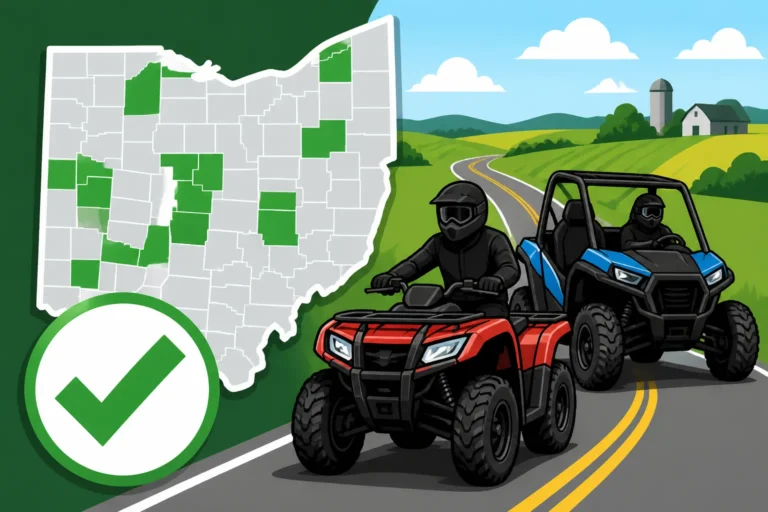
The heart of Ohio's fragmented road access lies in the power given to local governments. Instead of a top-down mandate from the state, it's individual county commissioners and township trustees who hold the keys to opening public roads to APV traffic. This highly localized decision-making process is the primary reason for the inconsistency riders encounter.
How County Commissioners Vote to Open Roads to APVs
For county-owned and maintained roads, the authority to allow APV use rests firmly with the county commissioners. These elected officials represent the interests of their constituents and, after deliberation, can pass resolutions to open specific county roads or even all county roads within their jurisdiction to APVs. This process typically involves public hearings, community input, and careful consideration of safety, traffic patterns, and potential impacts on local residents. For example, a rural county might see the benefit of allowing APVs on its less-trafficked county roads for agricultural purposes or to connect small communities, whereas a more densely populated county might be hesitant due to safety concerns. The result is a county-by-county patchwork, where you might find [Washington County Resolution 2024-1114] opening its roads, while a neighboring county keeps them closed.
How Township Trustees Open Their Roads to APV Riders
Even more granular than county control is the authority granted to township trustees. Townships, being smaller subdivisions within counties, also have the power to decide if APVs can use the roads they maintain. Just like county commissioners, township trustees will typically hold meetings and vote on resolutions that permit or restrict APV access. This means that even if a county allows APVs on its roads, individual townships within that county might have different rules for their township roads. Imagine a scenario where you're riding a county road legally, but as soon as you turn onto a township road, you become an illegal operator. It's a prime example of the complexities riders face, and why you need to research [Ohio Rules for Riding a Township Road] for every planned trip.
Why One Township Says Yes and the Next Says No
The reasons behind a township or county's decision to open or close roads to APVs are varied and often reflect local priorities and concerns. One township might be predominantly rural, with a strong agricultural community where APVs are used daily for farm tasks. For them, opening roads might be seen as a practical necessity and a benefit to their residents, leading to a "yes" vote. Consider a township in Muskingum County that might allow [Riding Muskingum Township Roads].
In contrast, an adjacent township might be more residential, with concerns about noise, dust, increased traffic, or perceived safety risks to children and other road users. These concerns could easily lead their trustees to vote "no," keeping their roads closed to APVs. Furthermore, local law enforcement capacity, the condition of the roads, and even the history of accidents involving APVs can all play a role in shaping these decisions. This creates a highly localized landscape where knowing the specific rules for [Riding Newport Township Roads] versus [Riding Salem Township Roads] becomes absolutely critical for any rider.
The Reality of State Routes and Interstates
While local governments have the power to open county and township roads, there are certain types of roadways in Ohio that remain consistently off-limits to APVs across the entire state. These are the major arteries that connect cities and regions, and for very good reasons, they are not part of the local control debate.
Why State Routes Stay Closed in Ohio
State routes, marked by their distinctive shield signs (like US Route 33 or State Route 550), are managed and maintained by the Ohio Department of Transportation (ODOT). These roads are designed for higher speeds, heavier traffic volumes, and different vehicle types than APVs. Introducing ATVs and UTVs, which typically have lower top speeds, different handling characteristics, and less visibility than standard cars and trucks, onto these major thoroughfares would create significant safety hazards. The state's position is clear: these routes are not suitable for APV operation, and there is no mechanism for county or township resolutions to override this state-level prohibition. This is a crucial distinction and a core reason [Why State Routes Stay Closed in Ohio], regardless of what local governments decide for their own roads. While you might be able to [Crossing a Highway on an APV in Ohio] at designated intersections, sustained riding on them is a firm no.
Why Interstates Stay Closed in Ohio
The rationale for keeping interstates closed to APVs is even more stringent than for state routes. Interstates are high-speed, limited-access highways designed for maximum traffic flow and specific types of vehicles. The speeds attained on interstates (often 70 mph or more) are far beyond what most APVs are safely capable of, and the vehicles themselves are simply not built for such an environment. The risks of an APV breaking down, being involved in a high-speed collision, or simply impeding the flow of traffic on an interstate are immense. Therefore, interstates remain entirely closed to APVs, just as they are to bicycles, pedestrians, and many other types of slow-moving vehicles. There's no local carve-out or exception for interstate travel; it's a non-negotiable safety standard enforced statewide, reinforcing the lack of a comprehensive road right.
Equipment Requirements for Road-Legal UTVs (and why ATVs are different)
Even if a local jurisdiction opens its roads to APVs, that doesn't mean any APV can just roll out. UTVs, specifically, often have a path to road-legality through an inspection process, whereas ATVs typically do not. This equipment disparity is another critical factor contributing to the absence of a statewide road right.
The Ohio Inspection a UTV Must Pass
For a UTV to be considered road-legal on locally approved roads in Ohio, it usually has to pass a specific inspection that ensures it meets certain safety and equipment standards. This isn't a casual look-over; it's a detailed check against a list of required items, many of which are standard on automobiles. You're looking at things like proper lighting (headlights, tail lights, brake lights), turn signals, rearview mirrors, a horn, a windshield with wipers, and sometimes a roll cage or seat belts. Companies like SuperATV specialize in aftermarket parts that can help owners equip their UTVs to meet these often-strict requirements. The purpose of this inspection is to bring the UTV as close as possible to the safety standards expected of other vehicles sharing public roads. Without this inspection and the necessary equipment, even if the road is open, your UTV isn't ready. Delve deeper into [Ohio's UTV Inspection Before Registration] to understand the full scope of what's required.
Why a Quad Skips the Inspection
Here's where the distinction between ATVs (often referred to as quads) and UTVs becomes particularly relevant. Generally, ATVs are explicitly excluded from the type of road-use inspection that UTVs undergo. This is primarily due to their fundamental design. An ATV's straddle seating position, handlebar steering, and inherent instability at higher speeds or on paved surfaces make it inherently less suitable for safe road operation, even with added accessories. Trying to add turn signals, a windshield, or even a functional horn to an ATV often doesn't adequately address the core safety concerns of operating such a machine in traffic. Therefore, while UTVs might be able to gain limited road access, ATVs almost universally cannot, regardless of local ordinances. The state's position on this is pretty clear: quads are simply not designed for road duty.
Essential Equipment for UTV Road Use
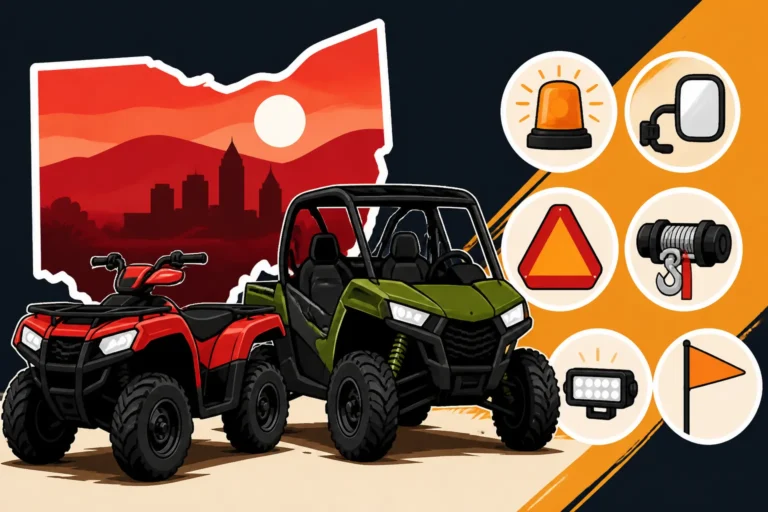
So, what exactly does a UTV need to have to even be considered for road use in Ohio, assuming a local road is open? It's a laundry list of components designed to make the vehicle visible, controllable, and safer for both the operator and other drivers. Beyond the basics of headlights and taillights, you'll need at least one rearview mirror, and typically a left and right mirror. A horn is a must for alerting others. Turn signals, both front and rear, are essential for communicating your intentions. A working brake light is also critical. A windshield, often made of safety glass, and accompanying windshield wipers are usually required, especially for enclosed cabs. Furthermore, proper tires designed for road use, a functional muffler, and a spark arrester are often part of the package. It's a significant investment to bring a UTV up to these standards, but it's the only way to even consider operating it on open public roads. For a comprehensive list, check out [Ohio UTV Equipment Rules Explained].
Navigating Open Roads and Understanding Limitations
Even when you've done your homework and found an open road, and your UTV is fully equipped and inspected, there are still crucial rules and limitations to keep in mind. Knowing these nuances is key to staying legal and safe.
Finding Out Which Roads Are Open
The most challenging part of riding APVs on Ohio roads is often simply figuring out where it's allowed. Because there's no central, statewide database, riders must take the initiative to contact local authorities directly. This means calling the county commissioners' office for county roads and the township clerk's office for township roads. It's not uncommon for townships to post resolutions on their websites or at their administrative buildings, but a direct phone call can often yield the most current and accurate information. Asking specific questions like "Are [Muskingum Township Roads] open to APVs?" can save you a lot of headaches. It's a tedious process, but absolutely necessary to avoid fines or legal trouble. Companies like SuperATV that provide accessories for road-legal UTVs also often have resources or communities where riders share information about local ordinances, which can be a helpful starting point.
| Road Type | Governing Authority | Potential for APV Use | How to Check |
|---|---|---|---|
| Interstate Highways | Ohio Department of Transport | None | Not Applicable |
| State Routes | Ohio Department of Transport | None | Not Applicable |
| County Roads | County Commissioners | Possible | County Commissioner Office |
| Township Roads | Township Trustees | Possible | Township Clerk Office |
| Private Roads | Landowner | Yes | Landowner Permission |
Crossing a Highway on an APV in Ohio
Even if state routes are closed to continuous APV travel, Ohio law often makes provisions for crossing them. The ability to cross a state route or even a U.S. highway is crucial for connecting approved county or township road sections, or for reaching trailheads. These crossings must be done safely and, typically, at a designated intersection. You can't just cross anywhere you please; it has to be a legitimate intersection where you have the opportunity to yield to traffic and cross perpendicular to the flow. This usually means stopping, looking both ways, and proceeding only when it is absolutely safe to do so, treating it like any other intersection for a motor vehicle. Remember, even during a crossing, you are generally subject to [Ohio Rules for Riding a County Road] or township road, meaning your machine needs to be legal for those roads first.
Riding Off and Alongside an Ohio Road
Ohio law also addresses the scenarios of riding alongside a road, often referred to as riding the berm, or briefly operating an APV off the immediate paved or gravel surface. For APVs that are legally on an open road, riding the berm is sometimes permitted if the ground allows and it's done safely without interfering with other traffic or pedestrians. This can be a practical solution in areas where the shoulder is wide and stable. However, "off-road" means off the paved or gravel surface of the road itself; it doesn't grant permission to simply ride wherever you please beside the road on private property or delicate ecosystems. Furthermore, operating an APV on private land adjacent to a road requires explicit permission from the landowner. Riders need to be incredibly mindful of trespass laws. Understanding these subtle distinctions is part of being a responsible rider in Ohio and avoids potential legal issues like those covered in [Ohio Fines for an Unregistered APV]. Always remember to carry your proof of registration and insurance, as well as your driver's license, whenever you're operating on public access roads, even if it's just for a short hop.
Disclaimer
This article is for general informational purposes only and does not constitute professional advice. Laws, prices and regulations vary by location and change over time. Consult a qualified professional for guidance on your specific situation.