What to Do When Your APV Plate Gets Bent
There's nothing quite as frustrating as noticing your beloved all-purpose vehicle (APV) plate is bent, twisted, or otherwise unreadable after a particularly spirited ride or even just a tight squeeze in the garage. It might seem like a minor cosmetic issue, but in Ohio, a clearly visible and intact APV plate isn't just a nicety—it's a legal requirement. This guide will walk you through exactly what to do when your Ohio APV plate takes a hit, from assessing the damage to navigating the replacement process at your local Deputy Registrar's office, ensuring you stay on the right side of the law and back on the trails without a hitch.
Why an APV Plate Gets Bent in the First Place and Why It Matters
Our APVs are built for adventure, for tackling rough terrain, muddy trails, and winding paths. It's precisely this adventurous spirit that often puts the humble license plate in harm's way. Whether it’s a tight turn around a tree stump or the unexpected jostle of a trailer ride, these plates face a constant barrage of potential hazards. Understanding why they get damaged is the first step in both preventing it and knowing what to do when it inevitably happens.
The Daily Grind: Trails, Tumbles, and Tight Spaces
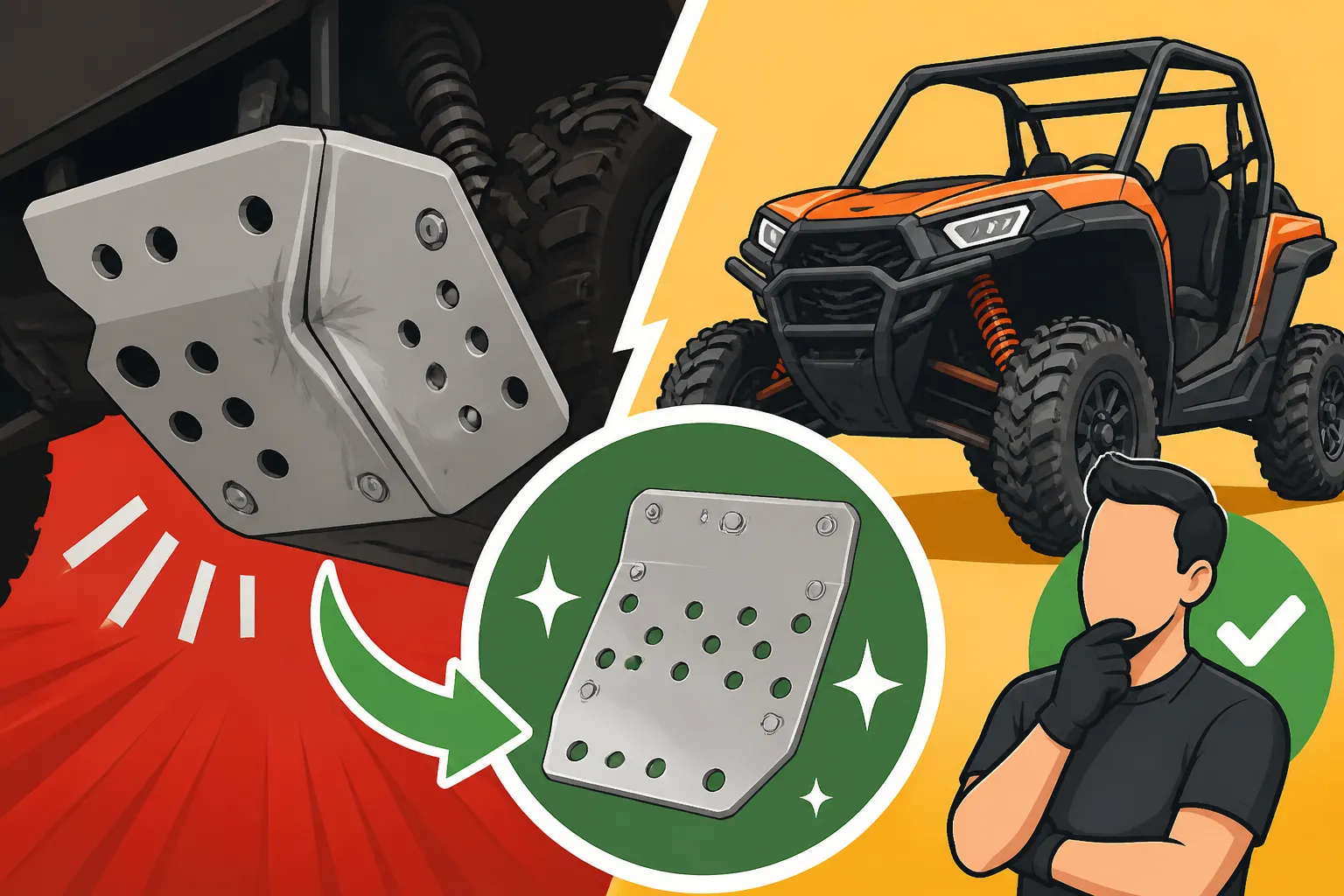
Think about a typical day out with your quad or side-by-side. You're navigating through dense woods, maybe kicking up some mud, or traversing rocky inclines. A stray branch can whip up and smack the plate, or a minor slide can send a rock directly into it. Even a low-speed tip-over, something many experienced riders have encountered, can put immense pressure on a plate mounted in an exposed area. These machines are designed to take a beating, but their thin aluminum plates are often the first to show the scars of a good ride.
It's not just the trails, either. The journey to and from the trailhead can be just as hazardous. If you're trailering your APV, especially if it's packed tightly with other gear or machines, a shift in cargo or even road debris can easily bend or ding your plate. And let's be honest, how many times have we squeezed a machine into a tight garage spot, only to hear that tell-tale scrape against a wall or another piece of equipment? These everyday occurrences, though minor, are often the culprits behind a mangled plate.
The significance of this damage isn't just about aesthetics. Your APV plate is more than just a piece of metal; it's your vehicle's official identification. It links your machine directly to you, the registered owner, and is crucial for law enforcement to identify your vehicle on public roads, county routes, or even in the state forests. A damaged plate, even if it seems minor, can make this identification process difficult or impossible, leading to potential issues down the line.
Legal Imperatives: Why a Clear Plate Is Non-Negotiable
In Ohio, the law is pretty clear: your APV plate needs to be "distinctly visible." This isn't just vague legal speak; it means that all the numbers, letters, and the validation sticker must be easily readable from a reasonable distance. When you're out riding, especially on roads or in designated riding areas, law enforcement officials need to be able to identify your vehicle quickly and without ambiguity. A plate that's bent, crumpled, or obscured by mud to the point of being unreadable falls short of this requirement.
Failing to have a distinctly visible plate can lead to more than just a friendly reminder from a park ranger. You could face a citation, which means a fine and the hassle of dealing with court, even if you had no intention of obscuring your plate. Imagine being pulled over on a township road where APVs are permitted, only to find yourself explaining why your plate looks like it lost a fight with a tree. It's an inconvenience that's easily avoidable by ensuring your plate is always in good order. This also extends to the validation sticker; if the sticker is peeling or completely gone, even on an otherwise pristine plate, it can still be considered an issue, as it's part of the complete legal display.
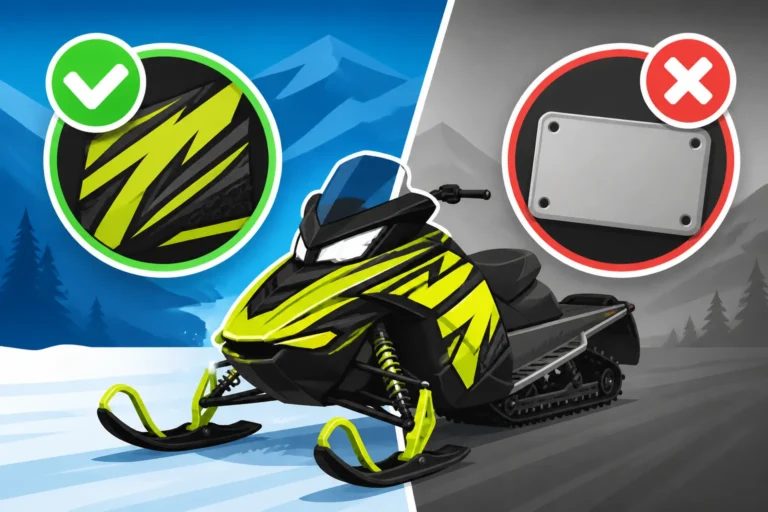
Beyond potential fines, an unreadable plate can cause delays if you're ever in an accident or need assistance while out riding. Emergency services or other riders might struggle to identify your machine, potentially wasting precious time. It’s about more than just avoiding a ticket; it's about ensuring your vehicle can be properly identified in any situation, protecting both you and others around you. This requirement is why Ohio issues a unique plate for APVs, rather than just a decal like a snowmobile receives. For more on this, you might find [Why Ohio Issues a Plate and Not a Decal] an interesting read.
Assessing the Damage and Deciding Your Next Steps
Once you notice your APV plate is bent, don't panic. The first step is always to calmly assess the damage. Not every crease or scuff means an immediate trip to the Deputy Registrar. Sometimes, a quick fix might be all that's needed, while other times, a full replacement is the only responsible course of action. Knowing the difference can save you time and potential legal headaches.
Is It Just a Cosmetic Ding or Truly Unreadable?
This is the crucial question. Take a good look at your plate. Can you still clearly see all the numbers and letters? Is the validation sticker still fully legible and securely attached? Try stepping back a few feet, as if you were another driver or a law enforcement officer. From that distance, is the plate's information unmistakable? If you have to squint, tilt your head, or get right up close to decipher it, then it's likely not "distinctly visible" enough for Ohio law.
A minor bend that doesn't obscure any characters or peel the sticker might be something you can carefully straighten with a pair of pliers and a block of wood, taking care not to damage the reflective coating or embossed numbers. However, if the plate is creased through numbers, torn, or significantly warped, attempting to repair it yourself might only make it worse or compromise its integrity further. For example, if the bend is so severe it causes the paint to chip or the reflective surface to crack, it could impede visibility, especially at night. When in doubt, err on the side of caution and consider replacement.
Sometimes, the plate might not even be bent, but it could be covered in caked-on mud or debris. While that's not structural damage, it still makes the plate unreadable. Always make sure your plate is clean before you head out. A quick spray with the hose and a wipe can save you a lot of trouble. The key is that the information on the plate, including the [Ohio APV Plates and Validation Stickers], must always be clear for identification.
When a Faded APV Plate Has to Be Replaced: Beyond Physical Damage
Physical bending isn't the only reason you might need a new plate. Over years of sun exposure, mud baths, and harsh weather, plates can fade, peel, or rust. The reflective coating can degrade, making it difficult for the plate to be seen in low light or at night. The numbers and letters, once crisp, might become faint and indistinct. In these cases, even if the plate is perfectly flat and undamaged physically, it still fails the "distinctly visible" test.
Imagine a scenario where your APV plate has been on your quad for years, enduring countless rides through various conditions. The bright colors have dulled, the black letters have started to look grey, and the validation sticker is barely clinging on. While there's no visible dent or crease, the overall legibility has severely diminished. This kind of wear and tear, just like a significant bend, necessitates a replacement. An officer checking your plate, particularly from a patrol vehicle, might struggle to read the details, potentially leading to a stop.
Similarly, if your validation sticker has fallen off, peeled away, or become so weathered it's unreadable, you'll need to address it. While a sticker can sometimes be replaced individually at the Deputy Registrar's office, often the best course of action is to replace the entire plate to ensure everything is fresh and compliant. This ensures that when an officer checks your plate, they clearly see valid registration. This concept is similar to how a license plate must be maintained for a car or truck, ensuring constant readability.
The Official Process: Ordering a Replacement Plate in Ohio
Once you've determined that your APV plate needs to be replaced, whether due to bending, fading, or general wear and tear, the next step is to navigate the official channels. In Ohio, this process is relatively straightforward, but it requires knowing where to go and what documents to bring. Don't worry, it's not as daunting as it might seem!
Gathering Your Paperwork and Heading to the Deputy Registrar
To get a replacement APV plate in Ohio, you’ll need to visit a Deputy Registrar's office. It's important to remember that these offices handle vehicle registrations and plates, while the Clerk of Courts Title Office handles the actual titling of vehicles. For a simple plate replacement, your destination is the Deputy Registrar. You can usually find a list of convenient locations on the Ohio BMV website.
When you go, make sure you bring essential documents. You'll definitely need your Ohio driver's license or state ID for identification. More importantly, you'll need proof of ownership and current registration for your APV. This usually means your current registration card for the APV, or if that's somehow unavailable, your APV title. While you won't be titling the machine, these documents prove you are the legal owner entitled to a replacement plate. Having a clear [An Ohio Bill of Sale for an APV] from when you purchased the machine can also be helpful, especially if there are any discrepancies in records or if you need to trace ownership. Services like LawDepot offer templates for such documents, ensuring you have robust paperwork for all your vehicle transactions.
Make sure you also have the APV's Vehicle Identification Number (VIN) readily available. While it will be on your registration card or title, knowing it beforehand can speed up the process. A quick photo on your phone of your current registration card and plate (if readable) before you head out can also be a good backup. The Deputy Registrar's office will need to verify your identity and the APV's information to issue a replacement.
Filling Out the Necessary Forms for a Replacement Plate
When you arrive at the Deputy Registrar's office, you'll typically be asked to fill out a simple application for a replacement plate. This isn't usually a complex multi-page document like the one you might use for a new title (such as [Ohio Form BMV 3722 Explained]); rather, it's a straightforward form requesting basic information. You'll need to provide your personal details, your APV's plate number (even if it's bent, try to recall or check your old registration), and its VIN.
The form will likely ask for the reason for the replacement—you'll check a box indicating "mutilated," "lost," or "stolen," depending on your situation. For a bent plate, "mutilated" would be the most appropriate choice. Be honest and accurate in your reporting. The Deputy Registrar will process this form and typically issue you a temporary paper tag or provide details on when your new plate will arrive. Remember that there will be a fee for the replacement plate itself, plus the standard service charge. You can expect the total cost to include the plate fee and the [Ohio's $3.50 Deputy Registrar Fee] for the service provided at the counter. Knowing the [Ohio APV Plate Replacement Cost] beforehand can help you budget appropriately.
After completing the form and paying the fees, the Deputy Registrar will initiate the order for your new plate. They might give you a receipt or a temporary document to carry with you until your physical plate arrives. It’s crucial to keep this proof of application with you when riding, as it shows you've taken the necessary steps to rectify the situation and are awaiting your official replacement. This documentation can be invaluable if you're stopped by law enforcement before your new plate arrives.
What Happens Next: Waiting for Your New Plate
Once you've submitted your application and paid the fees at the Deputy Registrar's office, the waiting game begins. The new physical plate isn't usually issued on the spot; it's typically mailed to your registered address within a certain timeframe. The exact timing can vary, but generally, you can expect it to arrive within a few weeks. Your Deputy Registrar's office should be able to give you an estimated delivery window.
During this waiting period, it's essential to keep any temporary documentation or receipts provided by the Deputy Registrar. If you are stopped by law enforcement, presenting this proof of application can demonstrate that you are in compliance and simply awaiting your new plate. Riding without a valid plate (even if you've applied for a replacement) or without proof of your application could still lead to questions or a citation. Always keep your registration card, whether physical or digital (a photo on your phone can work in many cases), and any temporary documentation with you when you ride.
When your new plate arrives in the mail, immediately affix it to your APV in a clearly visible location, ensuring it meets all Ohio requirements for display. You'll also receive a new validation sticker, which you'll need to apply to the plate. This process ensures you're fully legal and ready to hit the trails with confidence again. Remember, every APV registration in Ohio follows a [Ohio's Three-Year APV Registration] cycle, and your new plate will align with this timeframe, usually expiring on December 31st of the third year.
Practical Tips for Preventing Future Plate Damage
Dealing with a bent APV plate is a nuisance, and while some damage is simply unavoidable given the nature of off-road riding, there are definitely steps you can take to minimize the risk of a repeat performance. A little foresight and some smart habits can go a long way in protecting your plate and saving you a trip to the Deputy Registrar.
Protective Measures and Smart Riding Habits
One of the simplest and most effective ways to protect your APV plate is to invest in a heavy-duty license plate frame or protector. These aren't just for aesthetics; they can provide a buffer against impacts from flying debris, branches, or minor bumps. Look for frames made from durable materials like robust plastic or even metal that can absorb some of the force that would otherwise bend your plate directly. Make sure any protector you choose does not obscure the plate's numbers, letters, or the validation sticker.
Beyond physical accessories, adopting smarter riding habits can significantly reduce plate damage. While it's tempting to push the limits, being mindful of your machine's rear during tight maneuvers can prevent accidental scrapes. When backing up, especially in wooded areas or near obstacles, take it slow and be aware of what's behind you. Many plates get bent from backing into a tree trunk or a rock that was out of sight. Consider where your plate is mounted; sometimes, a slightly different mounting location, if permissible and still clearly visible, can shield it from common impacts.
Regular cleaning also helps. Caked-on mud can hide minor damage, and if left for too long, can even contribute to corrosion or make it harder to spot a developing issue like a peeling sticker. A quick check of your plate's condition before and after each ride should become part of your routine. This small habit can catch minor issues before they become significant problems.
Secure Transport and Storage
The way you transport and store your APV also plays a critical role in plate preservation. When loading your quad or side-by-side onto a trailer, ensure it's securely tied down and won't shift during transit. Unsecured machines can slide or bounce, potentially allowing parts of the APV or other cargo to impact the plate. Consider using wheel chocks and multiple tie-down points to keep everything stable. Also, think about any items you might be hauling with your APV; loose tools, gas cans, or camping gear can easily become projectiles on bumpy roads, especially if they are not secured properly.
During storage, whether in a garage, shed, or barn, be mindful of where your APV is positioned. Avoid parking it in areas where it might be easily bumped by other vehicles, equipment, or even people walking by. If space is tight, consider putting up a temporary barrier or using bright markers to make the APV's presence more obvious. For long-term storage, a protective cover can shield the entire machine, including the plate, from accidental knocks, dust, and environmental wear.
Finally, ensuring all your APV-related documents are well-organized and easily accessible can help in preventing future plate issues. For instance, if you ever sell your APV, having a clear [An Ohio Bill of Sale for an APV] prepared, perhaps through a platform like LawDepot, ensures a smooth transfer of ownership. This kind of diligent record-keeping indirectly helps, as any future plate issues will be easier to resolve if your ownership chain is impeccable. Keeping all your [Ohio APV Registration Paperwork] organized also makes it easier to reference your VIN or plate number should you need a replacement.
Here's a quick summary of the steps involved in replacing a bent Ohio APV plate:
| Step | Description | Key Actions |
|---|---|---|
| 1. Assess Damage | Determine if the plate is truly unreadable or just cosmetically dinged. | Check if all numbers, letters, and the validation sticker are distinctly visible from a reasonable distance. Consider if fading or peeling also affects legibility. |
| 2. Gather Documents | Collect required identification and APV ownership proof. | Obtain your Ohio Driver's License/State ID, APV registration card, or title. Note your APV's VIN. |
| 3. Visit Deputy Registrar | Go to the correct office for plate replacement. | Locate your nearest Ohio Deputy Registrar's office. (Not the Clerk of Courts Title Office for this transaction). |
| 4. Complete Application | Fill out the form for a replacement plate. | Provide personal details, APV plate number, VIN, and reason for replacement (e.g., "mutilated"). Pay the replacement plate fee and the [Ohio's $3.50 Deputy Registrar Fee]. |
| 5. Await New Plate | Receive temporary documentation and wait for mail delivery. | Keep any receipts or temporary permits provided. Your new plate and sticker will be mailed to your registered address, typically within a few weeks. |
| 6. Install New Plate | Affix the new plate and sticker to your APV. | Once received, mount the new plate securely in a clearly visible location and apply the new validation sticker correctly. Ensure it complies with [Keeping an Ohio Plate Distinctly Visible]. |
Disclaimer
This article is for general informational purposes only and does not constitute professional advice. Laws, prices and regulations vary by location and change over time. Consult a qualified professional for guidance on your specific situation.