Hauling a Machine In From Pennsylvania
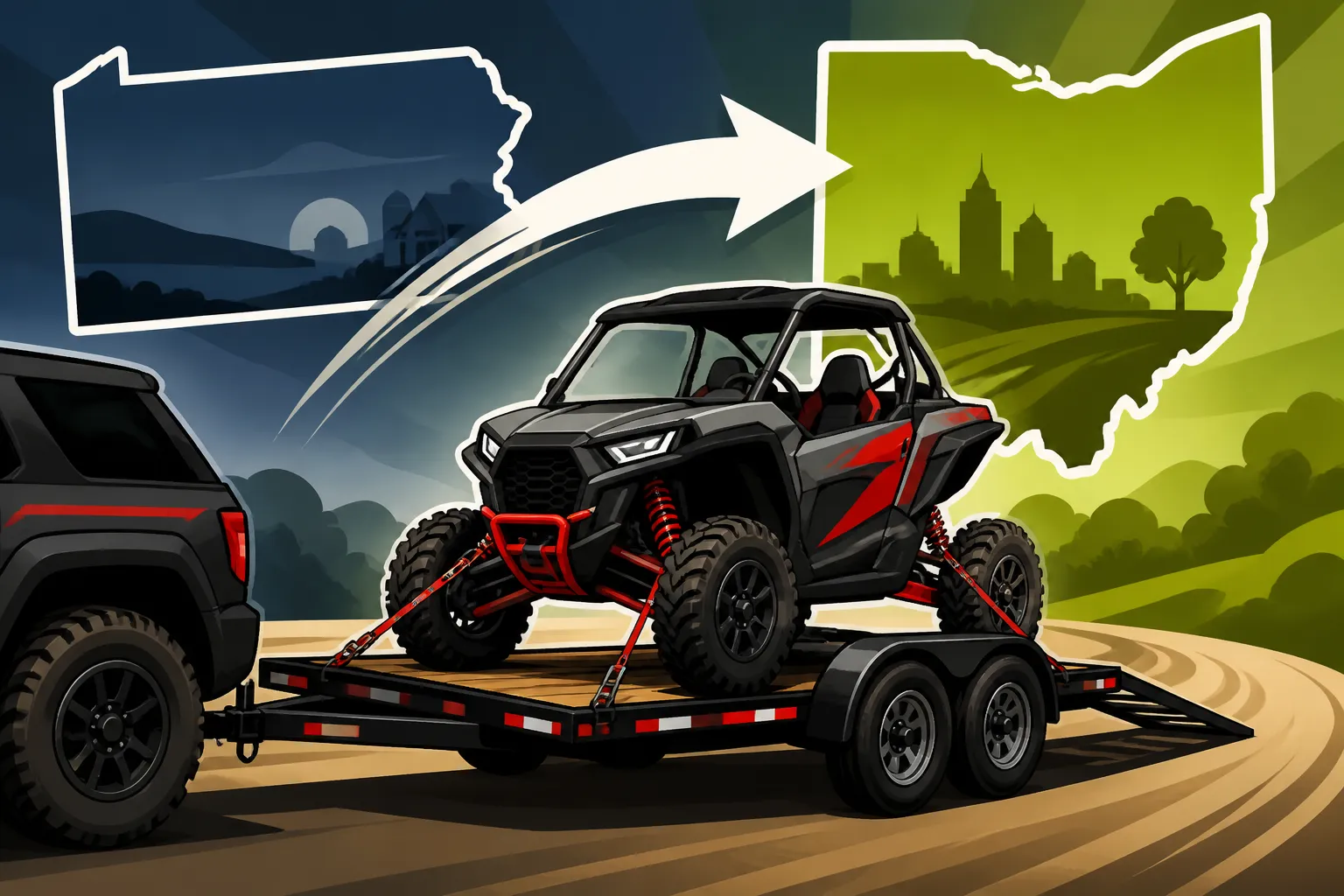
Bringing an all-purpose vehicle (APV) — whether it's an ATV, UTV, or dirt bike — across state lines to make Ohio its new home can feel like navigating a maze. You’re ready to hit those Ohio trails or farm fields, but first, you have to untangle the bureaucratic threads of titling and registration, especially when you're coming from a state like Pennsylvania with its own unique rules. This guide is here to walk you through the often-confusing process of successfully titling and registering your machine from Pennsylvania in Ohio, making sure you understand each step to avoid frustrating delays.
Understanding Ohio's APV Laws for Out-of-State Machines
When you bring your machine into Ohio, it enters a new legal landscape. What Pennsylvania called your ATV or UTV might not be exactly what Ohio calls it, and understanding this difference is the crucial first step in getting everything squared away. Ohio has its own specific definitions and requirements, and they apply to your machine once it's here, regardless of its origin.
Ohio's APV Definition and What It Means for Your Pennsylvania Machine
In Ohio, most off-highway vehicles fall under the umbrella term of an "All-Purpose Vehicle," or APV. This includes your typical four-wheeled ATVs, side-by-sides (UTVs), and even dirt bikes, provided they meet certain criteria regarding weight, width, and engine size. Pennsylvania might use terms like "ATV," "OHV," or "Dirt Bike" without necessarily lumping them all under one broad category for titling and registration purposes. The key takeaway is that if your machine fits Ohio's definition of an APV, it will need an Ohio title and registration if you intend for it to reside here permanently.
This can be a point of confusion for many. You might have bought your ATV years ago in Pennsylvania, used it on private land, and never worried about a formal title because Pennsylvania didn't require one for that specific type of machine or usage. Now, bringing it to Ohio means you need to get it titled, often for the first time in its existence. Ohio cares about what the machine is according to its own laws, not necessarily how it was categorized or used in its previous state. It’s about ensuring every machine that calls Ohio home is properly documented for ownership and trail access. To understand more, check out [How Ohio Law Defines an APV].
The Core Requirement: Ohio Registration and Titling
At the heart of bringing a Pennsylvania machine to Ohio is the fundamental requirement for an Ohio title and an Ohio registration. If your machine is going to be primarily operated or stored in Ohio, you'll need both. The title proves legal ownership, much like a car title, and the registration allows you to legally operate it where permitted, such as on state forest trails or designated county/township roads.
It’s tempting to think your existing Pennsylvania registration (if you even had one) would be enough, but that’s generally only true for short visits. We’re talking about situations where you’re just passing through or visiting Ohio trails for a weekend. If you’re moving to Ohio, or if the machine's primary location is now Ohio, you’re looking at a full titling and registration process. There are specific rules for visitors, covered in [Do Nonresidents Need Ohio Registration?], but for permanent residency, assume you need to start fresh with Ohio paperwork.
The Titling Process: Getting Your Pennsylvania Machine onto Ohio Records
Titling is often the more complex step when dealing with an out-of-state machine, especially from Pennsylvania, where titling requirements for ATVs and UTVs might differ significantly from Ohio's. You'll need to gather your proof of ownership and make a trip to your local County Clerk of Courts Title Office. This isn't the same place you'll register it, so don't be surprised when they send you on your way to another office afterward.
Proving Ownership: What Documents Ohio Needs From Pennsylvania
The biggest hurdle for many Pennsylvania riders is proving ownership in a way that Ohio accepts. If your machine did have a Pennsylvania title, fantastic! That makes the process much smoother. You'll simply present the Pennsylvania title, signed over to you (or in your name, if you're the original owner), along with your identification.
However, it's very common for ATVs or older UTVs from Pennsylvania not to have a traditional title, particularly if they were bought used or were never registered for any kind of road use. In these cases, Ohio will typically require a strong bill of sale as proof of ownership. This bill of sale needs to be comprehensive, including:
- The full names and addresses of both the buyer and seller.
- The date of the sale.
- A clear description of the APV, including make, model, year, and crucially, the Vehicle Identification Number (VIN).
- The purchase price.
- Signatures of both parties.
If your existing bill of sale is handwritten or seems a bit informal, it might be wise to create a more formal one. Resources like LawDepot offer templates for bills of sale that can help ensure you have all the necessary information clearly documented. This can make the process smoother at the title office. You can also learn more about what Ohio looks for with [An Ohio Bill of Sale for an APV].
The Ohio Clerk of Courts: Your First Stop for Titling
Unlike vehicle registration, which is handled at Bureau of Motor Vehicles (BMV) Deputy Registrar agencies, titling an APV in Ohio happens at a County Clerk of Courts Title Office. This is an important distinction, and many first-timers mistakenly go to the wrong office first. Your local Clerk of Courts handles all vehicle titles, including APVs.
When you go, make sure you bring:
- Proof of Ownership: Your original Pennsylvania title (if you have one) or a robust bill of sale. If you're bringing a bill of sale, especially if it's from a state that doesn't title ATVs, consider having a detailed template from LawDepot ready, even if it's just for your own records, to show due diligence.
- Identification: Your valid driver's license or state ID.
- VIN Verification: In some instances, particularly if you're coming from a non-titling state or there are concerns about the VIN, the title office might require a VIN inspection. This usually involves a law enforcement officer or an authorized dealer verifying that the VIN on your paperwork matches the one on the machine. It's a way to combat theft and ensure the machine is what the paperwork says it is. You can research [Checking a VIN Before an Ohio Purchase] to be prepared.
It’s critical to arrive with all your ducks in a row. The clerks are there to help, but their hands are tied if you don’t have the proper documentation. For a deeper dive into this initial step, check out [Titling an APV at an Ohio Clerk of Courts].
What to Expect at the Title Office (and Potential Hurdles)
Once you're at the Clerk of Courts Title Office, you'll present your documents. The clerk will review them to ensure everything is in order. If you have a clean Pennsylvania title, the process is usually straightforward: they'll process the transfer, collect the title fee, and issue you a brand-new Ohio Certificate of Title. They'll tell you the exact title fee, but remember that prices can change, so always check with your local office or the Ohio BMV website for the most current figures. For more on this, you can look up [What an Ohio APV Title Costs].
However, if you're coming from Pennsylvania with only a bill of sale because your ATV or UTV was never titled there, expect a bit more scrutiny. The clerk will carefully examine your bill of sale and may ask additional questions to verify ownership. In some cases, if the ownership history is unclear or the bill of sale is insufficient, they might guide you through a "bonded title" process, which is a bit more involved, or require further documentation. Patience and thorough preparation are your best allies here. It's also worth noting that some older machines, particularly dirt bikes, might have never had a title anywhere. Ohio often has a process for these machines to receive an initial title, which again, leans heavily on verifiable proof of ownership like a detailed bill of sale. Using a template from a service like LawDepot can add a layer of professionalism to your ownership documentation, even for older machines.
Registering Your Newly Titled APV in Ohio
Once you have that shiny new Ohio Certificate of Title in hand, you're halfway there! The next step is to register your APV, which is a separate but equally important process. This is where you'll get your Ohio APV plate and validation sticker, allowing you to legally ride on designated trails and roads.
Heading to the Deputy Registrar's Office
With your Ohio title, your next destination is a BMV Deputy Registrar agency. These are the same places where people register their cars and trucks. You'll often find them conveniently located in strip malls or dedicated offices throughout your county. Remember, the Clerk of Courts handles titles, and the Deputy Registrar handles registrations and plates – two different offices for two different but connected tasks.
When you visit the Deputy Registrar, you'll need to bring:
- Your Ohio Certificate of Title: This is crucial, as they need to verify you are the legal owner.
- Proof of Insurance: If you plan to operate your APV on any public roads (even if just crossing them), Ohio law requires proof of financial responsibility. Even if you only ride on trails, many riders opt for insurance for peace of mind.
- Identification: Your valid driver's license or state ID.
The staff at the Deputy Registrar will help you fill out the necessary forms, often Form BMV 3722. You can get a head start by understanding what that form entails by reading [Filling Out Form BMV 3722]. For a general overview of where this step takes place, consult [Where to Register an APV in Ohio].
Ohio's Three-Year Registration Cycle and Costs
One unique aspect of Ohio APV registration is its three-year cycle. Unlike cars that are renewed annually, APVs are registered for a full three years, with the registration expiring on December 31st of the third year. This means you won't have to think about renewal again for a while, which is a nice convenience.
When you register, you'll pay the registration fee for the three-year period, plus a small deputy registrar service charge. These fees change periodically, so always confirm the current figures with the Deputy Registrar or on the Ohio BMV website. The cost is a small investment in legal access to Ohio's fantastic riding opportunities. For more details on this cycle, see [Ohio's Three-Year APV Registration] and [Ohio APV Registration Cost].
Upon successful registration, you'll receive your Ohio APV license plate, a validation sticker to place on the plate, and a registration card. Make sure to keep that registration card with you when you ride, either on your person or securely stored on your machine. Learn more about the specific plate and sticker rules in [Ohio APV Plates and Validation Stickers].
What to Do If Pennsylvania Didn't Title Your Machine
We’ve touched on this, but it bears repeating: this is the most common point of friction for riders coming from Pennsylvania. Many ATVs, especially older ones, simply were never titled in Pennsylvania. Ohio, however, generally does require a title for APVs.
If you don't have a Pennsylvania title, the Clerk of Courts Title Office will be your primary hurdle. You'll need to present the strongest possible proof of ownership, which usually means a detailed bill of sale. If you've owned the machine for a long time and the original bill of sale is lost or inadequate, you might need to try and trace the ownership history as best as possible. Sometimes, a sworn affidavit of ownership can be accepted, but this varies by county and circumstance. This is where using a template from a reputable source like LawDepot to create a formalized "new" bill of sale (if you are documenting an older, informal purchase) or affidavit can be incredibly helpful for the Ohio officials. They want to see that you’ve done your due diligence in proving ownership. Don't be discouraged; many people successfully title machines that were never titled in their previous state.
Special Considerations for Pennsylvania Riders Coming to Ohio
While the general titling and registration process is consistent for all machines entering Ohio, there are a few specific points that often come up for Pennsylvania riders due to differences in state laws. Being prepared for these can save you headaches.
When Your Pennsylvania Registration Might Be Enough (Short Visits Only)
It’s important to distinguish between making Ohio your APV's permanent home and simply visiting. If you are a Pennsylvania resident bringing your properly registered (or untitleable, if that’s PA’s rule for your machine) APV to Ohio for a short recreational visit, you might be covered by reciprocity. Ohio law states that a nonresident may operate an APV in Ohio if it is legally registered in their home state and is not in Ohio for more than 30 days. However, this is only for a true visitor. If you're moving to Ohio, or regularly transporting your machine here for extended periods, you'll need Ohio's plates. Don't confuse visitor rules with resident requirements. For more on this, check out [What Ohio Law Asks of Nonresident Riders].
Addressing the Bill of Sale & Proof of Ownership
Again, the bill of sale is your hero if you don't have a Pennsylvania title. Pennsylvania's laws regarding ATV and UTV titling and registration have evolved, and older machines or those used purely off-road might not have required a title. If you're buying a used APV from a private seller in Pennsylvania to bring to Ohio, insist on a clear, detailed bill of sale. Even if the seller says "we don't title ATVs here," get that bill of sale. It's your primary legal document proving you own the machine.
If you find yourself needing to create a new, comprehensive bill of sale for a machine you've owned for years but never had adequate documentation for, consider using legal form services like LawDepot. They provide structured templates that cover all the necessary information Ohio officials will be looking for. It adds legitimacy and clarity to your claim of ownership.
What If Your Pennsylvania Machine Isn't Considered an APV There?
Sometimes, a machine might be classified differently. For example, a specialized dirt bike might be seen purely as an off-road competition vehicle in Pennsylvania, but in Ohio, if it meets the physical specifications, it's an APV for titling and registration purposes. Ohio's definition takes precedence. Don't assume that because your machine wasn't regulated or titled in a certain way in Pennsylvania, it will be the same here. Always refer to Ohio's statutory definitions for "All-Purpose Vehicle" to understand how your machine will be classified once it crosses the border. The physical characteristics (weight, width, engine size, number of wheels) are what Ohio focuses on.
Titling and Registration Steps for a Pennsylvania APV in Ohio
Here’s a quick summary of the journey your Pennsylvania machine will take to become legally recognized in Ohio:
| Step | Office to Visit | Key Document(s) Needed | What You Get/Do |
|---|---|---|---|
| 1. Prove Ownership | County Clerk of Courts Title Office | PA Title (if applicable) or detailed Bill of Sale | Ohio Certificate of Title issued |
| 2. Pay Title Fee | County Clerk of Courts Title Office | Cash, check, or card (confirm accepted methods) | Receipt for title fee |
| 3. Register Your APV | BMV Deputy Registrar Agency | Ohio Certificate of Title, ID, Proof of Insurance | Ohio APV Plate, Sticker, Registration Card |
| 4. Pay Registration Fees | BMV Deputy Registrar Agency | Cash, check, or card (confirm accepted methods) | Receipt for registration and deputy fee |
Bringing your APV from Pennsylvania to Ohio really just requires patience and a good understanding of where to go and what to bring. You'll navigate the Clerk of Courts for your title and then the Deputy Registrar for your plate, ensuring your machine is ready for all the adventures Ohio has to offer.
Disclaimer
This article is for general informational purposes only and does not constitute professional advice. Laws, prices and regulations vary by location and change over time. Consult a qualified professional for guidance on your specific situation.