Keeping an Ohio Plate Distinctly Visible
Navigating the trails and open roads of Ohio on your ATV or UTV is all about freedom and adventure, but it also comes with a responsibility to keep everything above board. One of the trickiest parts of that, and a common headache for many riders, is making sure your Ohio APV plate is always "distinctly visible." Whether you're battling thick mud, tight brush, or just the inherent design quirks of your machine, keeping that plate clear and legible can feel like a constant struggle. This guide is here to walk you through exactly what Ohio law expects, why it matters, and some solid, real-world strategies to prevent an inconvenient roadside stop or a frustrating citation.
The Ohio Law on APV Plate Visibility
Let's cut right to it: Ohio has specific expectations for your APV plate, and they’re there for a good reason. It’s not just about adding another hoop to jump through; it’s about making sure every machine on public land or crossing a road can be easily identified.
What the Statute Says About Placement
Ohio law is pretty clear: your all-purpose vehicle (APV) needs to display a valid, current registration plate. The critical phrase here, which often causes a lot of head-scratching and frustration, is that it must be "distinctly visible." What does "distinctly visible" actually mean when you're slinging mud on a trail in Perry State Forest or navigating a bumpy township road in Washington County?
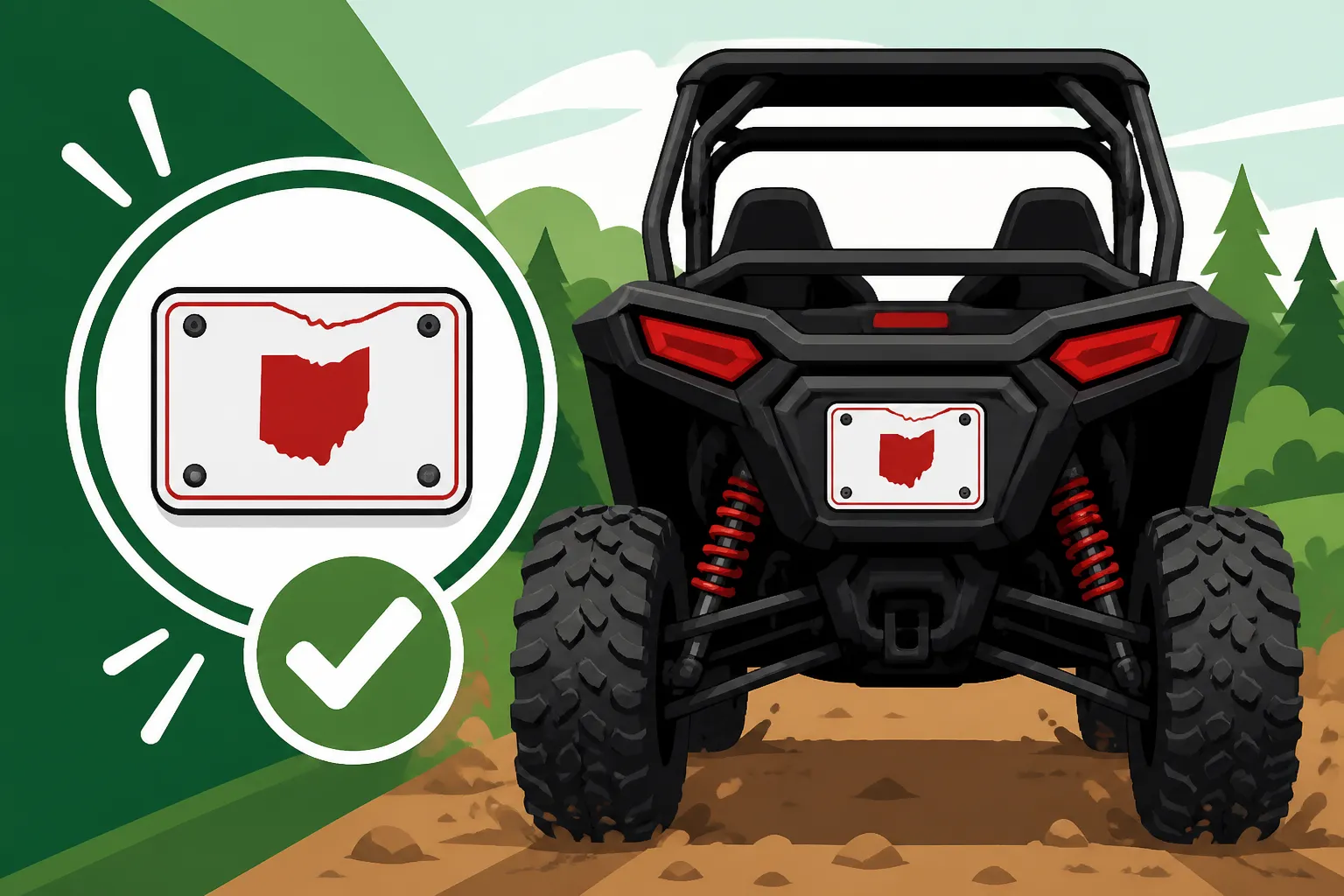
Essentially, it means that an officer, or anyone else needing to identify your machine, should be able to see the plate clearly without obstruction from a reasonable distance. This isn't just about whether the plate is on the machine; it's about its readability. It needs to be mounted securely on the rear of your APV, free from any cargo, accessories, or, most commonly, dirt and debris that might obscure the numbers and letters. Imagine trying to identify a plate when it's tucked under a muddy fender or partially hidden by a spare tire on the back of your side-by-side – that's what the law is trying to prevent. It's a common issue, especially with older ATV models or UTVs with large cargo beds, where finding an ideal, unobstructed spot can feel like a puzzle. When you're [Registering an APV in Ohio], you're agreeing to uphold these visibility standards.
Why the Law Cares So Much
The law doesn't just wake up one day and decide to make life harder for off-road enthusiasts. There's a genuine public safety and administrative purpose behind these rules. First and foremost, plate visibility is crucial for law enforcement. If an APV is involved in an accident, a trespass incident, or is simply being ridden where it shouldn't be, the plate is the primary means of identification. Without it, tracking down the responsible party becomes exponentially harder, which ultimately undermines the good reputation of the vast majority of responsible riders.
Beyond enforcement, visible plates also play a role in trail management and funding. The fees collected from [Ohio APV Plates and Validation Stickers] directly contribute to funds that maintain and expand Ohio's recreational trails. When plates are obscured, it makes it harder for park rangers and trail wardens to verify that machines are properly registered, ensuring that everyone using these valuable resources is contributing their fair share. It's a collective effort, and a simple, visible plate helps reinforce that system. The state uses the plate as your permit on state forest trails, so it’s how they know you’re authorized to be there.
Common Challenges to Keeping Your Plate Visible
Let's be real: keeping an APV plate clean and visible on an Ohio trail is often easier said than done. Riders face a myriad of practical challenges that can quickly turn a shiny new plate into an illegible mess.
The Battle Against Mud, Dirt, and Debris
This is probably the number one offender for most riders. Ohio's diverse terrain, from the sticky clay of the southern hills to the sandy loam of the northwest, guarantees that mud and dirt will be a constant companion on your rides. You start your day with a sparkling clean plate, hit a few puddles or dusty sections, and suddenly, your plate is caked in grime. This isn't just a minor annoyance; it's a legitimate visibility issue.
Imagine riding through the Monday Creek Trail System after a good rain. The deep ruts and splash zones are incredibly fun, but every rooster tail of mud adds another layer to your rear plate. Before you know it, the numbers and letters are completely obscured. The same goes for dusty trails in the dry summer months; fine silt can cling to the plate, creating a film that makes it unreadable. It's frustrating because you're out there enjoying the very conditions that make plate visibility so difficult, but the law doesn't make an exception for "trail conditions." We've all been there, pulling over to wipe a plate clean with a gloved hand, only for it to get dirty again moments later.
Obstructions from Gear and Machine Design
Another frequent problem arises from how we equip and modify our machines, or even how they come from the factory. Many ATVs and UTVs have robust rear racks, cargo beds, or even spare tire carriers. It’s natural to want to load these up with coolers, tool bags, extra fuel cans, or camping gear. However, these items can easily block the view of your plate.
Consider a side-by-side with a full cargo bed loaded with supplies for a weekend trip. If the plate is mounted low on the tailgate, that cooler or storage box you just secured could be completely covering it. Similarly, some aftermarket bumpers or exhaust systems might inadvertently push the plate into a less visible spot. Even a simple, factory-installed mud flap or a beefy rear grab bar can sometimes make the plate less "distinctly visible" depending on its exact placement. It's a constant design challenge for manufacturers and an ongoing puzzle for riders trying to balance utility with compliance.
Damage from Branches and Trail Hazards
Ohio's trails, especially in wooded state forests like Wayne National Forest, can be tight, winding, and unforgiving. Low-hanging branches, dense brush, and unexpected trail debris pose a significant threat to the integrity of your APV plate. It's not uncommon for a plate to get bent, scratched, or even completely torn off if it snags on a stray limb during a ride.
Picture yourself navigating a narrow section of trail, perhaps trying to squeeze through a gap between two trees. A branch, seemingly harmless, might catch the edge of your plate and fold it back, obscuring the numbers. Or, worse, a particularly stubborn snag could rip the plate clean off its mount, leaving you not only without a visible plate but also with the hassle of needing to order a replacement. [Replacing a Lost Ohio APV Plate] is an extra step and cost nobody wants to deal with, especially when it could have been prevented with a little foresight about mounting. These trail hazards are an inevitable part of off-road riding, but they demand that we think creatively about how to secure and protect our plates.
Practical Solutions for Enhanced Visibility
Don't despair! While the challenges are real, there are plenty of practical solutions to help keep your Ohio APV plate distinctly visible and avoid unnecessary trouble. It often comes down to smart mounting and regular attention.
Strategic Mounting Locations and Brackets
The first step is to carefully consider where your plate is mounted. The ideal spot is high on the rear of your machine, away from wheel spray, exhaust, and potential cargo. For many ATVs, this might mean a spot on the upper rear rack, possibly elevated slightly with a small bracket. For UTVs, mounting it high on the bed's tailgate or even on a roll cage extension can work well. The key is to get it out of the direct line of fire from mud and debris kicked up by the rear tires.
Aftermarket plate relocation brackets are a fantastic solution here. These are specifically designed to move your plate to a more prominent and protected position. They often come with built-in lighting for night riding, which is an important consideration under [Ohio Rules for Riding After Dark]. When choosing a bracket, look for something sturdy, made from durable materials like aluminum or steel, that can withstand the vibrations and impacts of off-road use. Ensure the plate itself is mounted rigidly to the bracket and doesn't flap or vibrate excessively, as this can lead to premature wear or damage. You want a secure attachment that won't give way on rough trails.
Cleaning and Maintenance Habits
Even with the best mounting, Ohio trails will eventually dirty your plate. Developing good cleaning habits is crucial. Make it a routine to quickly wipe down your plate after every ride, or even during a ride if you stop for a break and notice it's completely caked. Keep a small, dedicated rag or a pack of wet wipes in your tool bag just for this purpose. It takes mere seconds to clean, but it can save you a lot of hassle.
Don't fall into the trap of thinking "it'll just get dirty again." The point is to make a reasonable effort to maintain visibility. A quick wipe-down can make all the difference to a deputy who might be observing your machine. Remember, even a slightly obscured plate could be considered non-compliant. Regularly inspecting the plate for damage, bending, or loose fasteners is also a good habit. You want to address any issues before they lead to a problem out on the trail.
Protecting Your Plate from Damage
Beyond strategic mounting, you can add an extra layer of protection to your plate. Clear plastic plate covers are readily available and can shield your plate from mud, scratches, and minor impacts, while still allowing the numbers to be read. These covers act as a sacrificial layer; it’s much cheaper to replace a cover than the entire plate if it gets damaged. Just make sure the cover itself doesn't cause glare or condensation that would make the plate less visible.
Metal plate frames can also add rigidity and help prevent the plate from bending or tearing at the mounting holes. For riders who frequently encounter dense brush, consider adding a small brush guard or even a custom piece of protective material around the plate area to deflect branches. When riding, be mindful of your plate's location. If you know a particular section of trail is notorious for low-hanging branches, try to pick your lines carefully to avoid them. Sometimes, a little extra caution can prevent significant damage.
What Happens If Your Plate Isn't Visible?
It’s easy to think "no big deal, it's just a dirty plate," but an obscured or missing Ohio APV plate can lead to some inconvenient and costly consequences. Understanding these potential outcomes can be a strong motivator for maintaining visibility.
The Risk of a Roadside Stop
Law enforcement officers, whether they're local deputies, state troopers, or park rangers, are trained to look for proper registration on all vehicles, including APVs. If your plate is obscured by mud, cargo, or simply missing, it immediately flags your machine as potentially non-compliant. This significantly increases your chances of being pulled over, whether you're riding a county road, crossing a state route, or even just leaving a trailhead.
When you're stopped, an officer will likely inquire about your registration status and the visibility of your plate. While "I just got muddy" is a common and often true explanation, it doesn't always absolve you of the responsibility to keep it visible. An officer needs to be able to identify your machine, and if they can't, they'll want to know why. It's not just about proving you're registered; it's about demonstrating that you are abiding by the law's explicit requirement for a "distinctly visible" plate. This interaction can disrupt your ride, cause delays, and lead to more serious consequences if you're not prepared.
Potential Fines and Citations
The most immediate consequence of an obscured or missing plate is the possibility of a citation. While the exact fine can vary depending on the jurisdiction and the specific circumstances, it's an expense and a hassle nobody wants. Think of it like getting a ticket for an expired tag on your car; it's a minor infraction, but it still costs money and time. [Ohio Fines for an Unregistered APV] can be quite a deterrent, even if the plate is technically there but simply unreadable.
Beyond the direct financial cost of the fine, you might also incur court fees or have to take time off work to address the citation. This can turn a fun day of riding into a stressful and expensive ordeal. While an officer might give you a warning for a slightly muddy plate, don't count on it. If they deem it significantly obscured or intentionally hidden, they are well within their rights to issue a ticket. This is why it's always better to err on the side of caution and ensure your plate is as visible as possible before you even head out.
Implications for Trail Access and Public Perception
While not a direct fine, the cumulative effect of poorly maintained or obscured plates can have broader implications for the entire Ohio APV riding community. When law enforcement and landowners consistently encounter machines that are hard to identify, it contributes to a negative perception of off-road riders. It can fuel arguments for stricter regulations, reduced trail access, or even outright bans in some areas.
Conversely, a community of riders who consistently demonstrate responsibility, including maintaining visible plates, helps build trust and support for continued access to trails and roads. When you see a group of riders with clearly visible plates, it reinforces the image of a lawful and respectful activity. Every rider's actions contribute to this perception. Adhering to simple rules like plate visibility helps protect the sport for everyone. We want to keep our access to beautiful places like the Wayne National Forest, and showing respect for the rules, even the seemingly small ones, is a big part of that.
Specific Ohio Rules and Considerations
Ohio's regulatory framework for APVs has some nuances that are worth understanding when it comes to plate visibility. It's not just about knowing where to put it, but also what kind of identification is required for different machines.
Distinguishing APV Plates from Snowmobile Decals
One point of confusion for riders, especially those who might also own snowmobiles, is the difference in identification. In Ohio, APVs receive a physical metal plate, much like a miniature car license plate, that must be mounted on the rear of the machine. Snowmobiles, however, typically receive decals that are affixed directly to the machine's body. [Why a Snowmobile Gets Decals Instead of a Plate] highlights this distinction.
This difference isn't arbitrary; it reflects the intended use and typical design of each vehicle. Snowmobiles operate in conditions where a physical plate might accumulate snow and ice, making a decal a more practical solution for visibility. APVs, designed for multi-season use across various terrains, are expected to display a traditional plate. For you, the APV rider, this means you can't rely on simply sticking a decal somewhere. You must have that rigid, distinct plate. This is important for understanding [Why Ohio Issues a Plate and Not a Decal] for your quad or side-by-side.
The Importance of Your Registration Card
While your plate is the external proof of registration, the actual registration card is the internal, documentary proof. Ohio law generally requires you to carry your registration card (and proof of insurance if riding on roads) whenever you operate your APV. [What Happens If You Ride Without Your Registration Card] is not something you want to find out the hard way.
Even with a perfectly visible plate, an officer might ask to see your physical registration card. It's vital to keep this card in a safe, waterproof, and easily accessible location on your person or machine. A waterproof pouch in your jacket pocket, a sealed container in your storage box, or even a protective sleeve on your machine's handlebars are good options. Just make sure it's secure enough not to fall out on a bumpy trail. Having both a clearly visible plate and a readily available registration card will make any interaction with law enforcement smooth and quick, allowing you to get back to enjoying your ride. This complete package demonstrates full compliance with [Ohio Registration and Insurance Proof] requirements.
Legal Considerations for Modifying Plate Placement
While you have some flexibility in how you mount your APV plate, the overarching requirement for it to be "distinctly visible" always applies. This means that while an aftermarket bracket or a custom mounting solution can be a great way to improve visibility, it must not inadvertently make the plate harder to see. Tucking the plate too far under a fender, mounting it at an extreme angle, or placing it in a spot where it's easily splashed and obscured could still lead to issues.
Always consider the spirit of the law. Is your plate easily readable from a reasonable distance, from behind, by someone standing or in another vehicle? If the answer is yes, you're likely in good shape. If you're using a legal document service like LawDepot for other legal forms or contracts, you understand the importance of precise language; "distinctly visible" is a critical legal term here. It's a balance between protecting your plate and ensuring it fulfills its legal purpose. If you're ever in doubt, observe how other riders in Ohio have successfully mounted their plates or consult with your local deputy registrar's office. You want to make sure your solution enhances visibility, rather than creating new problems.
Plate Mounting Options for Ohio APVs
| Mounting Location | Pros | Cons | Visibility Impact | Common Machine Types |
|---|---|---|---|---|
| Directly on Rear Fender | Standard, often factory location | Prone to mud/debris, vulnerable to bending/snags | Moderate | ATVs, some older UTVs |
| High on Rear Rack/Cargo Bed | Elevated, away from wheel spray, often clear of cargo | May require aftermarket bracket, can obstruct tall cargo | High | Most APVs |
| Aftermarket Relocation Bracket | Designed for optimal visibility, often includes lights | Additional cost, installation required | High | All APVs |
| Roll Cage Mount (UTVs) | Very high, excellent protection from mud and impacts | Requires specific cage design, may block rear view | Very High | UTVs |
| Above Rear Bumper | Good balance of protection and visibility, if space allows | Can still be vulnerable to mud, may require fabrication | High | ATVs, some UTVs |
Disclaimer
This article is for general informational purposes only and does not constitute professional advice. Laws, prices and regulations vary by location and change over time. Consult a qualified professional for guidance on your specific situation.