Ohio Spark Arrester Rules for Trails
A machine can sound quiet and still fail a spark-arrester check: the part that catches hot exhaust particles is not the same as the muffler. For Ohio riders, the rules depend partly on where the trail is and who manages it. Here’s how to identify the required equipment, check that it is working, and avoid assuming a road-ready machine is trail-compliant.
What a spark arrester does and when it matters
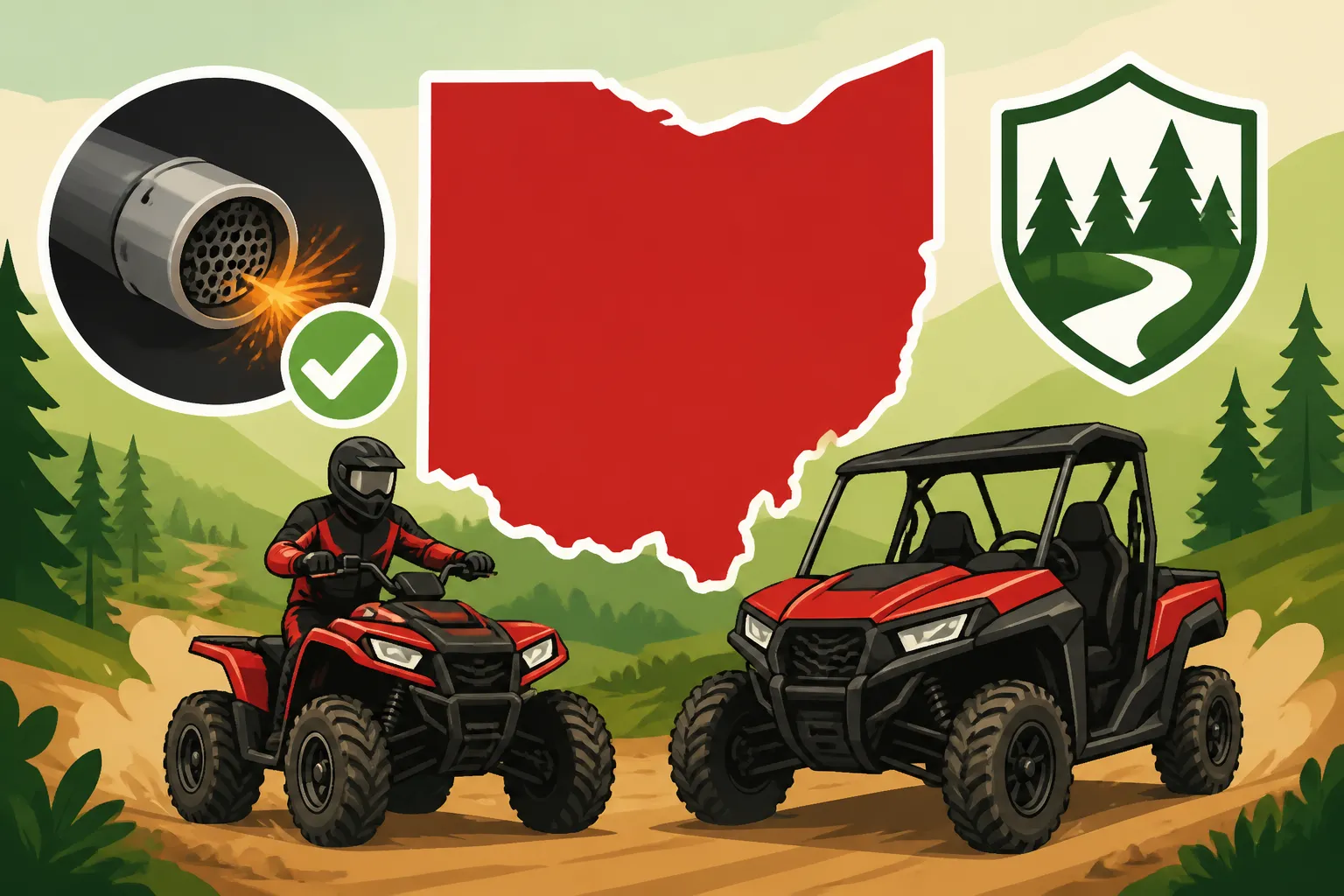
A spark arrester is a component in the exhaust system designed to keep hot particles from leaving the tailpipe. In dry conditions, those particles can start a fire. The arrester is often built into the muffler, but it may also be a separate insert or screen. Its location and design vary by machine.
A muffler has a different main job: reducing exhaust noise. A quiet muffler does not necessarily have a spark arrester, and a spark arrester does not automatically make a machine quiet enough for every riding area. That distinction matters because trail rules can address both equipment features.
In Ohio, riders should expect spark-arrester requirements on public riding land, including designated OHV areas in state and national forests. The land manager’s current rules determine exactly what equipment is required and what kind of arrester is acceptable. A requirement at a forest trailhead may be different from the rules at a private riding park or on a road. Check the rules for the place you plan to ride rather than relying on a general assumption about Ohio law.
| Where you plan to ride | What to check |
|---|---|
| Designated Ohio state-forest trails | Confirm the current forest riding rules, including spark-arrester and muffler requirements |
| Wayne National Forest OHV trails | Check current Forest Service requirements and any posted trailhead instructions |
| Private riding park | Review that park’s equipment and noise rules; requirements can differ between parks |
| Public road | Check applicable APV road equipment requirements separately; road compliance does not prove trail compliance |
| Private property | Follow the owner’s conditions and any applicable laws |
A spark arrester requirement is not a substitute for other riding rules. The machine may also need a suitable muffler, registration, plate, and other equipment depending on where it is operated. For a broader look at trail responsibilities, see Ohio Rules for Riding State Forest Land and Ohio Rules for Riding a National Forest.
A stock exhaust is not proof by itself
Some machines leave the factory with an exhaust system that includes a spark arrester. Others may have an arrester that is removable, replaceable, clogged, damaged, or missing after a previous owner modified the exhaust. Even when the machine is stock, do not treat that alone as proof that the equipment is present and in serviceable condition.
Use the owner’s manual and the manufacturer’s information for the exact year and model. Look for a reference to a spark arrester, spark-arresting screen, or approved exhaust assembly. A label or marking on the muffler may also help identify the system, but not every design is marked in the same place. If the documentation is unclear, ask a dealer or qualified repair shop to identify the exhaust parts.
How to check and maintain the equipment
A useful check starts with the specific machine, not a generic part listing. Exhaust components can look similar while differing in fit, function, or approval. Confirm the machine’s make, model, year, and exhaust configuration before ordering or installing anything.
- Read the manual. Find the maintenance section for the exhaust and look for instructions about an arrester or screen. Follow the maker’s procedure, including any cautions about hot parts.
- Inspect the exhaust when it is cool. Check for a missing end cap, loose fasteners, obvious damage, or signs that the exhaust has been altered. Never touch or open a hot exhaust.
- Confirm the correct component. If an arrester is removable, verify that the right insert or screen is fitted and secured as designed. Do not substitute a piece of improvised mesh.
- Clean it as directed. Carbon and debris can obstruct the exhaust screen. Use the manufacturer’s maintenance instructions; avoid damaging the screen or changing its shape.
- Recheck after repairs or modifications. Exhaust work can remove or replace components, so confirm that the arrester remains installed and that the machine still meets the riding area’s rules.
Do not drill, cut, remove, or modify an exhaust part to improve performance or sound without understanding the effect on compliance. Removing a screen may leave the machine without its arrester. An aftermarket muffler may be quieter or louder than the original, and it may or may not include the required spark-control component. A product description that says “performance exhaust” or “quiet” is not enough to establish that it meets a land manager’s requirement.
If you shop online, including on Amazon, compare the listing with the manufacturer’s part information and the rules for your riding area. Confirm fitment and any required approval before buying. If a listing is vague about whether the part includes a spark arrester, contact the seller or manufacturer rather than relying on the product photo.
Keep the arrester in working condition
A correctly fitted arrester can still need maintenance. A screen packed with carbon may restrict exhaust flow, while a damaged or loose screen may not do its job. Follow the service interval and cleaning method in the owner’s manual. If the screen is torn, badly corroded, missing, or cannot be secured, replace it with the correct part instead of trying to patch it.
Do not use an exhaust flame or a quick visual check as a substitute for identifying the part. A machine can run normally even if its arrester is missing, and a brief inspection may not reveal a damaged component inside the muffler. If you cannot verify the setup, have a repair professional inspect it before the ride.
Trail rules are not all the same
Ohio’s riding areas are managed by different entities. A state forest, a national forest, a private park, and a local road authority may each set different conditions. Requirements can also be affected by temporary closures or other posted restrictions. That means an answer that applies at one trailhead may not settle what is required somewhere else.
Before you load up, check the official riding rules for the destination and look for any updates about access or conditions. Trailhead notices can also provide important instructions. If the posted information is unclear, contact the land manager before riding. Ohio Trail Conditions Before You Ride explains why a current check matters, while Ohio Rules for Riding Off the Trail covers another common source of trouble: leaving the marked route.
Do not assume that a forest pass, registration plate, or road inspection includes an exhaust inspection or certifies the spark arrester. These items serve different purposes. Registration and access requirements are separate from machine condition, and a road-compliant machine may still need equipment to meet a trail operator’s rules. For the related equipment distinction, see Ohio Muffler Requirements for APVs and Ohio UTV Road Equipment List.
Private parks set their own operating conditions, so check directly with the park before visiting. Some may specify a noise limit, require a spark arrester, or refuse machines with modified exhausts. A machine that meets forest rules should not automatically be assumed to meet every private park’s policy.
Before you ride: a practical checklist
Use this short checklist before a trail trip:
- Identify the exact riding area and read its current rules.
- Confirm whether the rules require a spark arrester and whether they specify an approved type.
- Check the owner’s manual and parts information for your machine’s exhaust.
- Inspect the arrester when the exhaust is cool; confirm it is present, secure, and undamaged.
- Clean or replace it according to the manufacturer’s instructions.
- Check separately for muffler, noise, registration, plate, and access requirements.
- Ask the land manager or a qualified repair shop if you cannot verify compliance.
If an officer or park employee asks about the exhaust, stay calm and show the machine’s documentation if you have it. Do not remove a hot exhaust component at the trailhead or try to argue from the fact that the machine is quiet. If you are unsure what a roadside inspection may involve, What an Ohio Deputy Checks Roadside offers helpful context.
The safest rule is simple: verify the exact equipment requirement for the place you are riding, then make sure the arrester is installed and maintained as designed. It is a small part, but treating it as an afterthought can mean a delayed ride, a denied entry, or an avoidable fire risk.
Disclaimer
This article is for general informational purposes only and does not constitute professional advice. Laws, prices and regulations vary by location and change over time. Consult a qualified professional for guidance on your specific situation.